TWO LOOKS. ONE BRAND IDENTITY.
Give your audience a choice of looks in one garment with custom reversible hoodies. Combine contrasting colours, complementary graphics or understated branding on one side with a more expressive design on the other.
Develop both faces around your brand, from the fabric pairing to the pockets and finishing details. Whether you are planning a clothing collection or distinctive merchandise, create a hoodie designed to be worn either way.
Minimum 10 hoodies
Printed and embroidered branding
Personalised colours and placements
Options for teams, businesses and brands
10
Minimum order
24h
Free mockup
14–21
Working days
4.9 ★
from 1,200+ clients
MORE WAYS TO WEAR YOUR DESIGN
A reversible hoodie offers two deliberately finished wearable faces. Switch between colours, change the emphasis of your branding or create two different moods within the same piece.
Making that versatility work requires thoughtful construction. Seams, pockets, fastenings and labels should be considered from both directions so the garment feels intentional whichever side is showing.
Pair a minimal branded face with a graphic-led alternative, or use complementary colours for a more restrained design.
Choose materials that work together in weight, movement and care requirements rather than treating each face separately.
Develop artwork positions for each side, considering what remains visible when the hoodie is turned.
Plan the pockets, hood, hem and any fastening around the way the garment will be worn in both orientations.
BUILD YOUR TWO-SIDED DESIGN**
Start by defining the role of each side. One could feature a small logo in a neutral colour, while the other introduces a contrasting shade and larger artwork.
Decoration and construction need to be planned together. Printing, embroidery and labels must work with both wearable surfaces, including any stitching or backing that could otherwise appear on the reverse.
Add stitched branding where technically suitable. Embroidery backing and reverse stitching need to be managed so they do not compromise the second wearable face.
Create a clear change of look with contrasting fabrics, or choose related shades for a quieter transition between sides.
Request logos, lettering or graphics on suitable panels. The printing method and production sequence depend on the fabrics and garment construction.
Use different artwork positions on each side to give every look its own identity. Plan chest, back and sleeve designs against the complete garment layout.
Discuss discreet, accessible positions for brand and care information. Label placement should support comfort and the intended appearance on both sides.
Introduce both looks through coordinated hang tags and packaging. Include clear product information to help customers understand the reversible design.
DESIGNED INSIDE AND OUT
A reversible hoodie needs more than a second colour inside. Both faces should be considered as visible parts of the finished garment, with suitable seam finishing and practical details.
Define how the garment should look and function in each orientation. Fabric compatibility, bulk at the seams and access to pockets all influence the finished result.
Style
Pullover or suitable zip-up construction, subject to feasibility
Garment construction
Reversible hoodie designed with two wearable faces
Face A fabric
Selected composition, texture and colour
Face B fabric
Compatible composition, texture and colour
Fabric weight
Individual layer weights and combined garment feel
Fit
Agreed proportions allowing for the selected construction
Hood
Finish and appearance in both orientations
Seams
Construction suitable for two-sided wear
Pockets
Placement and accessibility on each face
Fastening
Suitable reversible zip hardware if a zip-up style is selected
Cuffs and hem
Finishing that works with both sides
Decoration
Agreed methods and positions for each wearable face
Labels
Brand and care-information placement
Sizes
Confirmed size range and garment measurements
Packaging
Available hang tags and branded presentation
Minimum order
Confirmed for the construction and decoration
Production schedule
Confirmed after design and feasibility review
Give each side its own identity while keeping the garment connected to your brand. Combine a neutral with a statement colour, pair two complementary shades or use tonal colours with different artwork.
Review the fabrics together rather than selecting them independently. Colourfastness, care compatibility and the potential for colour transfer between contrasting materials should be assessed for the chosen pairing.
Share references showing both sides, along with pocket, hood and fastening preferences. Explain how you want the wearer to switch between the two looks so the construction can be reviewed.
TWO SIDES TO YOUR STORY
Create merchandise with a deliberate change of look. Reversible styling can connect two colourways, two messages or different expressions of the same identity.
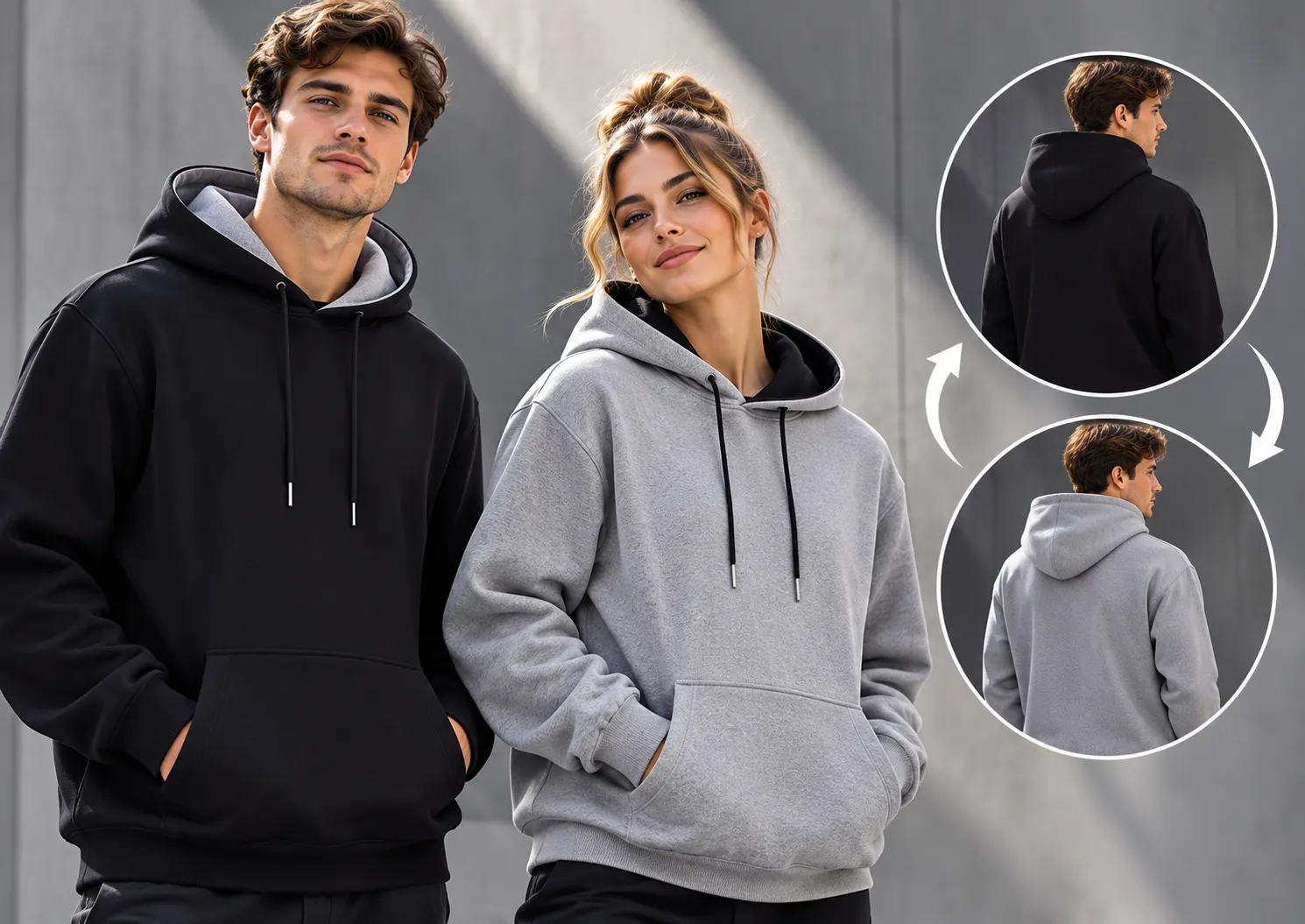
Businesses
Combine a subtle company-branded face with a more expressive casual design. Plan both looks around your audience and intended use.
Lifestyle merchandise
Creative promotional collections
Branded gifts and team clothing
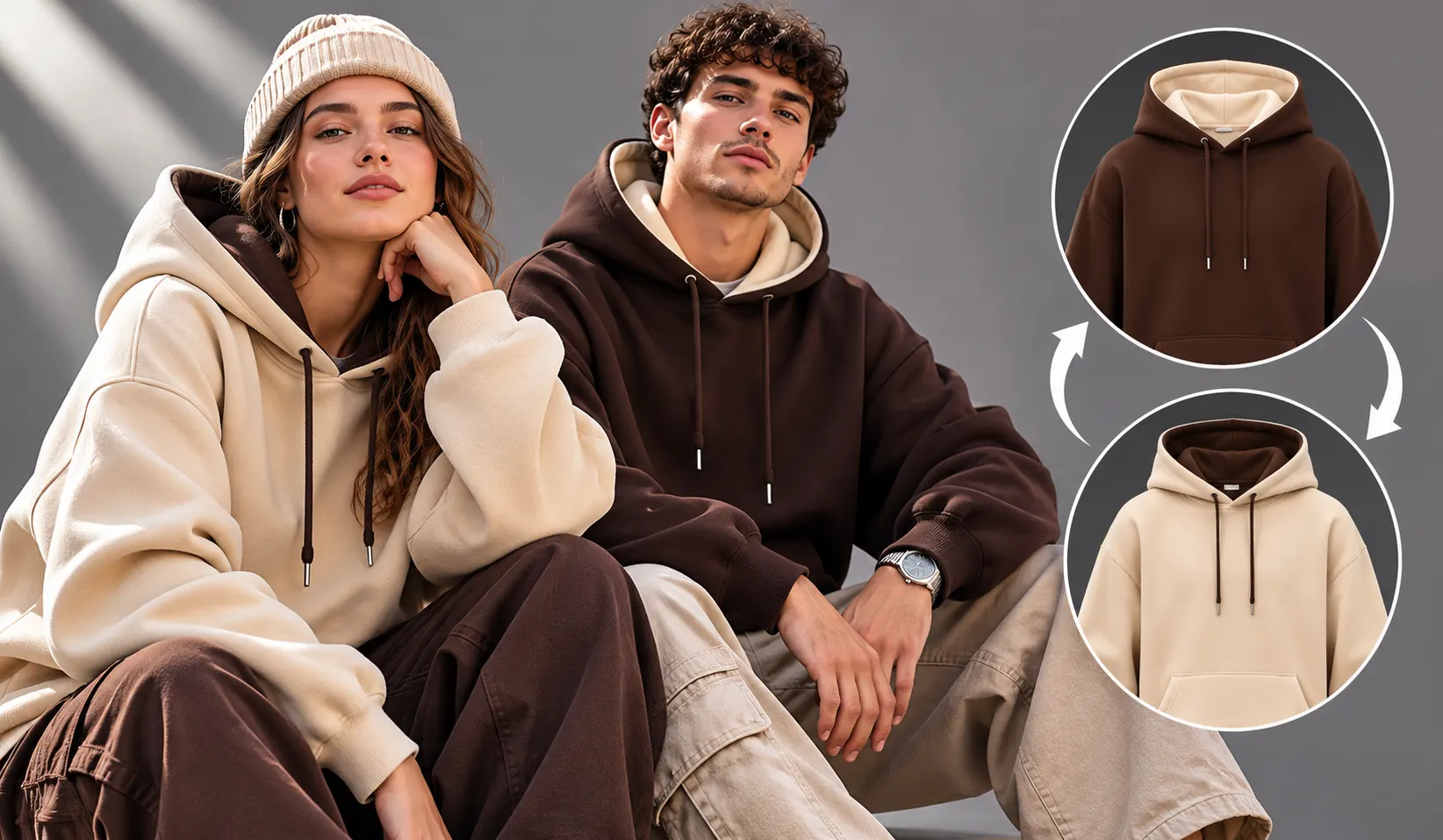
Sports Teams
Explore complementary team colours or pair prominent club branding with a more understated alternative for casual wear.
Supporter merchandise
Club lifestyle collections
Team travel clothing
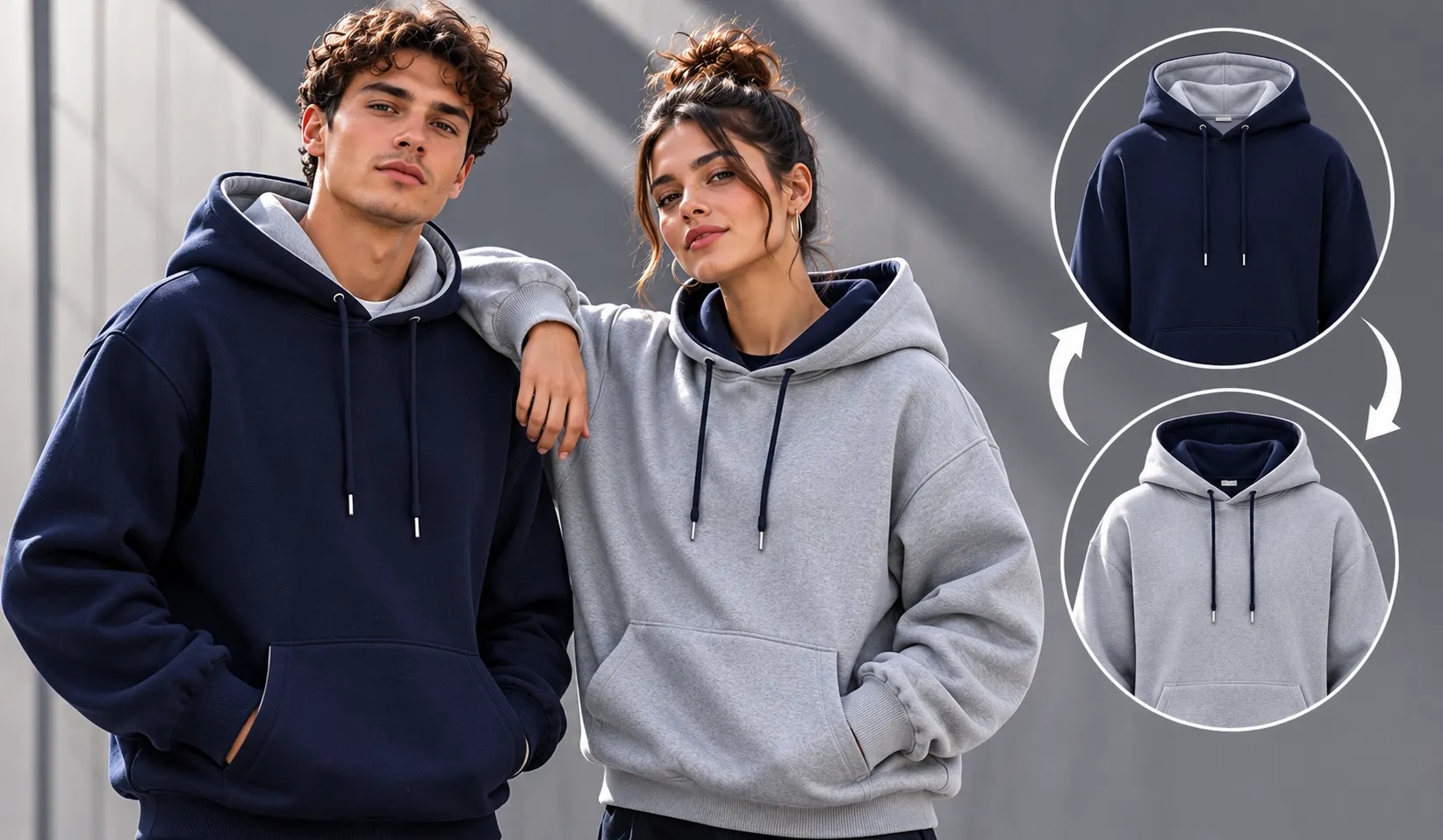
Schools & Universities
Create a society or student-group design that combines shared branding with a second colour or commemorative graphic.
University societies
Student merchandise
Group celebrations and milestones
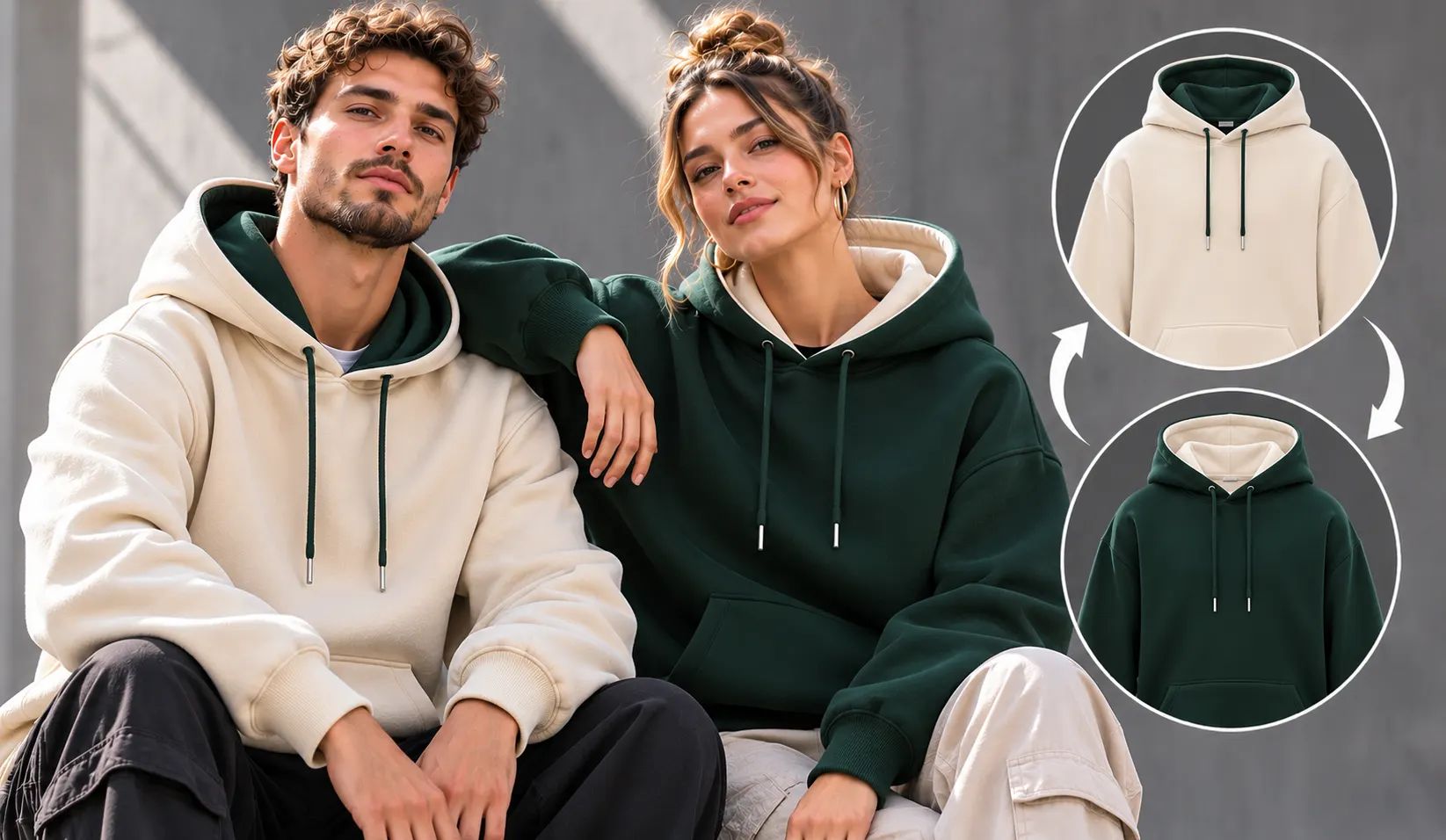
Events
Just let me know which shoulder style you’d like, mate, and we’ll make it for you.
Creative events
Collaborative launches
Commemorative merchandise
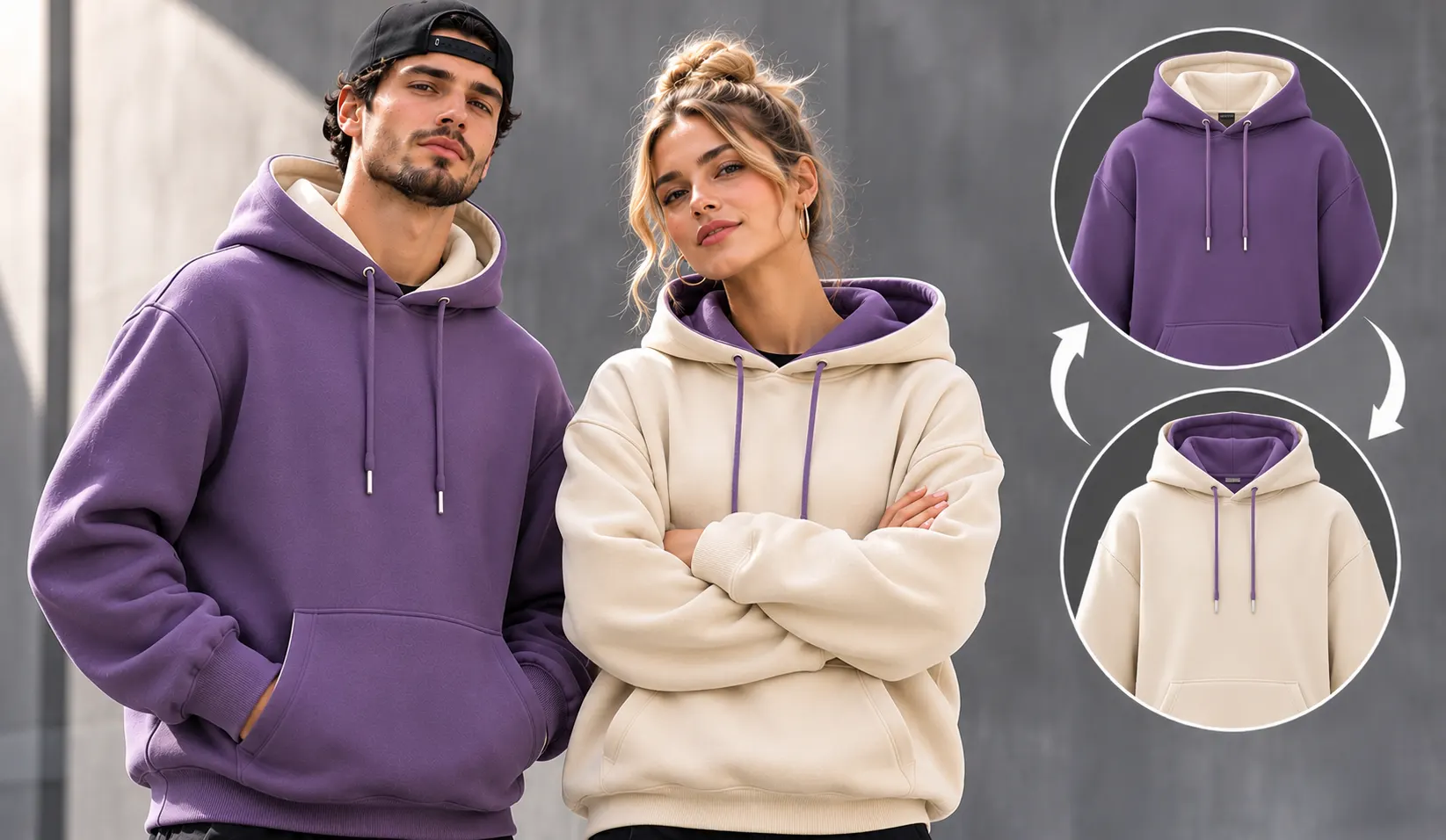
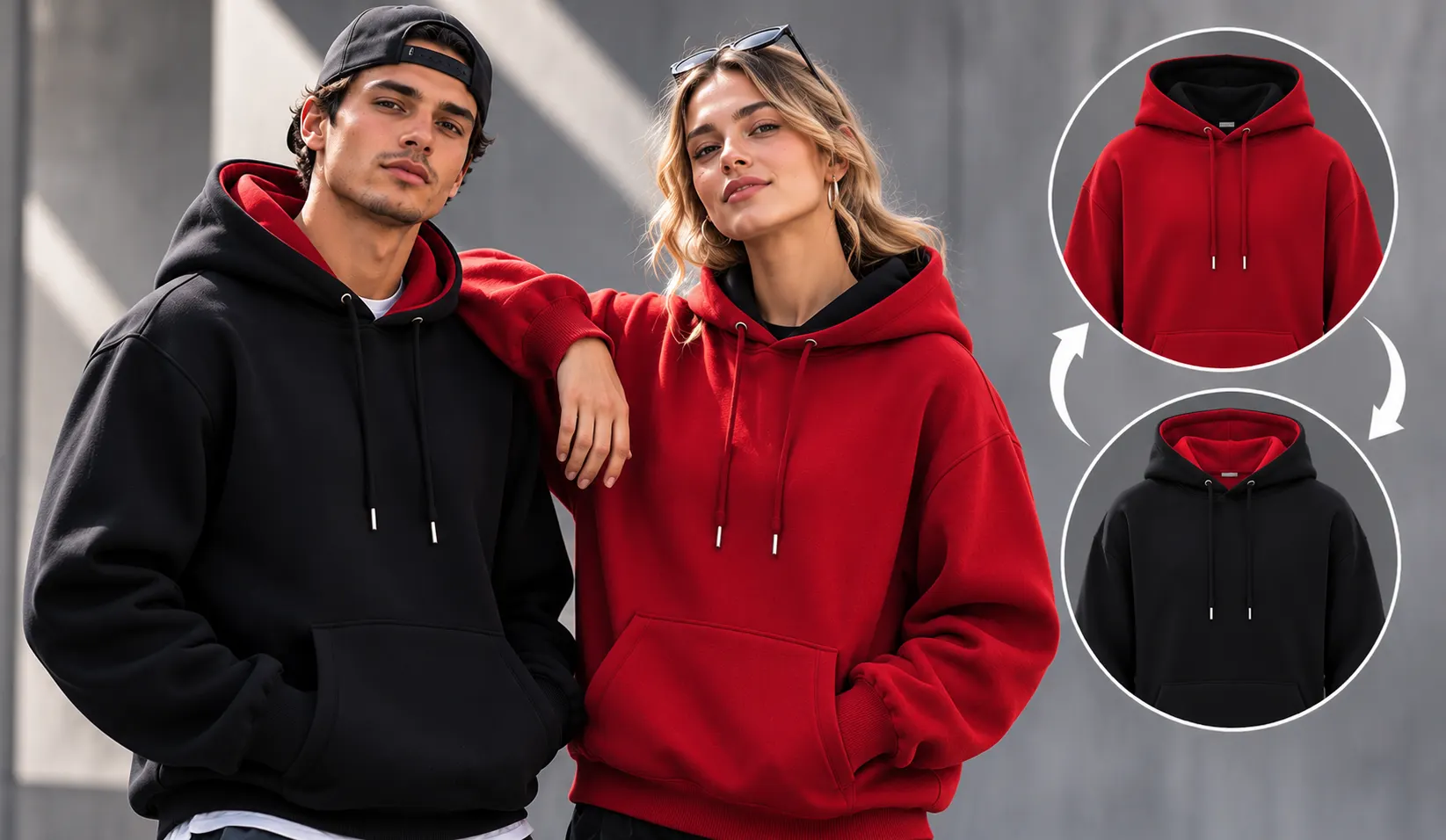
Clothing Brands
Build both sides into the product concept from the beginning. Coordinate the silhouette, fabrics and graphics to make the reversible feature central to the design.
Independent clothing collections
Two-colour product concepts
Graphic and minimal design combinations
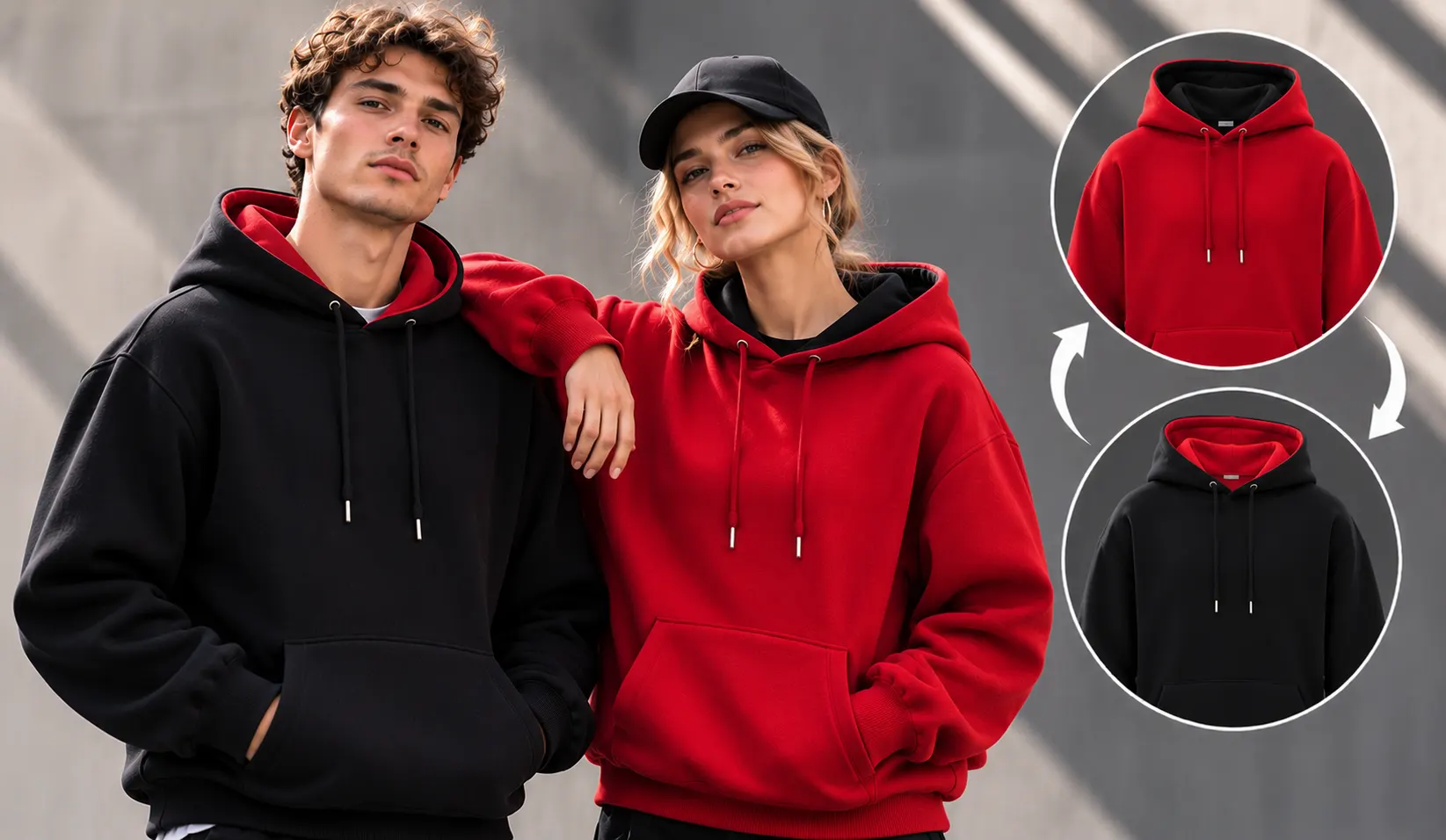
Charities
Pair a campaign message with a complementary branded face. Give supporters different ways to wear clothing connected to your organisation.
Awareness merchandise
Fundraising collections
Community collaborations
FROM TWO IDEAS TO ONE GARMENT
A clear brief for both wearable faces helps establish the right materials, construction and decoration.
1
Send artwork, colours and references for Face A and Face B. Include your quantity, size requirements and preferred garment style.
2
Check the proposed fabric pairing, seams, pockets and any fastening. Review the artwork dimensions and positions separately for each face.
3
Approve the complete garment brief and the applicable sample or design-review stages. Production follows the agreed construction and decoration requirements.
4
Your completed hoodies are prepared for dispatch to the agreed address. Share any fixed launch or event deadline during the initial enquiry.
REVERSIBLE HOODIE FAQS
Find practical guidance for planning a hoodie designed to be worn both ways.
A reversible hoodie has two intentionally finished faces that can each be worn on the outside. Its construction should account for visible seams, labels, pockets and any fastening in both orientations.
No. A lining may be intended only as an interior layer, with exposed construction details or labels that are not designed for outside wear. A reversible garment needs both faces to be considered wearable.
You can request different colours for the two faces. The fabrics should be assessed together for compatibility, care requirements and colourfastness, particularly where a dark material sits against a lighter one.
Different materials can be considered, but their weight, stretch, shrinkage and care requirements need to work together. An unsuitable pairing can affect how the garment hangs or behaves after washing.
Not necessarily. The overall feel depends on the fabric weights and construction. Two layers can add bulk, so the combined garment should be considered rather than judging either fabric alone.
Two-sided printing can be requested where the fabric and production method allow it. The decoration sequence may need to be planned before assembly, depending on the design and construction.
It may be possible with suitable construction. Reverse stitching and stabilising material must be considered so they do not interfere with the other wearable face. Feasibility should be confirmed before approving the design.
Yes, that is a design option to discuss. Define the artwork for each face separately, including its dimensions, colours and position.
Pocket access on both faces can be explored, but the construction needs to account for added layers and bulk. Confirm where the pockets will sit and how they function in each orientation.
A zip-up version requires suitable reversible fastening hardware and construction. Share your preferred style so technical feasibility, component availability and pricing can be assessed.
Brand and care labels need a position that remains practical without disrupting either look. Discuss suitable placement as part of the garment design rather than adding it after construction is finalised.
The same garment measurements apply in both orientations, although the appearance may change with fabric texture and colour. It should not be treated as two independently fitted garments.
Review measurements for the complete construction, allowing for the fabric layers and intended clothing underneath. Chest width, body length and sleeves should be considered together.
Different materials can react differently to washing. Fabric compatibility and any relevant testing should be considered before production, and the finished garment needs one suitable care routine.
Ask which sampling options are available for your specification. A physical sample can help assess both appearances, pocket access, seam bulk and overall fit. Confirm cost, timing and approval requirements before ordering.
Some seam details may remain visible depending on the design. The aim is to agree a finish suitable for both faces, whether that involves a clean enclosed construction or an intentional visible detail.
Provide separate files or clearly labelled layouts for Face A and Face B. Include colour references, artwork dimensions, garment measurements and construction images where available.
Include every requested pairing and its quantity in your enquiry. Each combination may involve different materials, preparation or minimum requirements.
The minimum depends on the reversible construction, fabrics, hardware and decoration. Share your intended quantity so suitable options can be confirmed.
Pricing reflects both wearable faces, the fabric pairing, construction, decoration and order quantity. Additional pockets, specialist hardware, labels and sampling can also affect the total.
Timing depends on material availability, construction development, approvals and production requirements. Request an estimated schedule with your quotation and highlight any fixed deadline early.
Follow the care instructions supplied for the complete garment. The method needs to suit both fabrics and all decoration. Avoid assuming that instructions for one material alone are suitable for the finished hoodie.
COMPARE YOUR CONSTRUCTION OPTIONS
Find the shape, fastening and fabric feel that suit your next project.
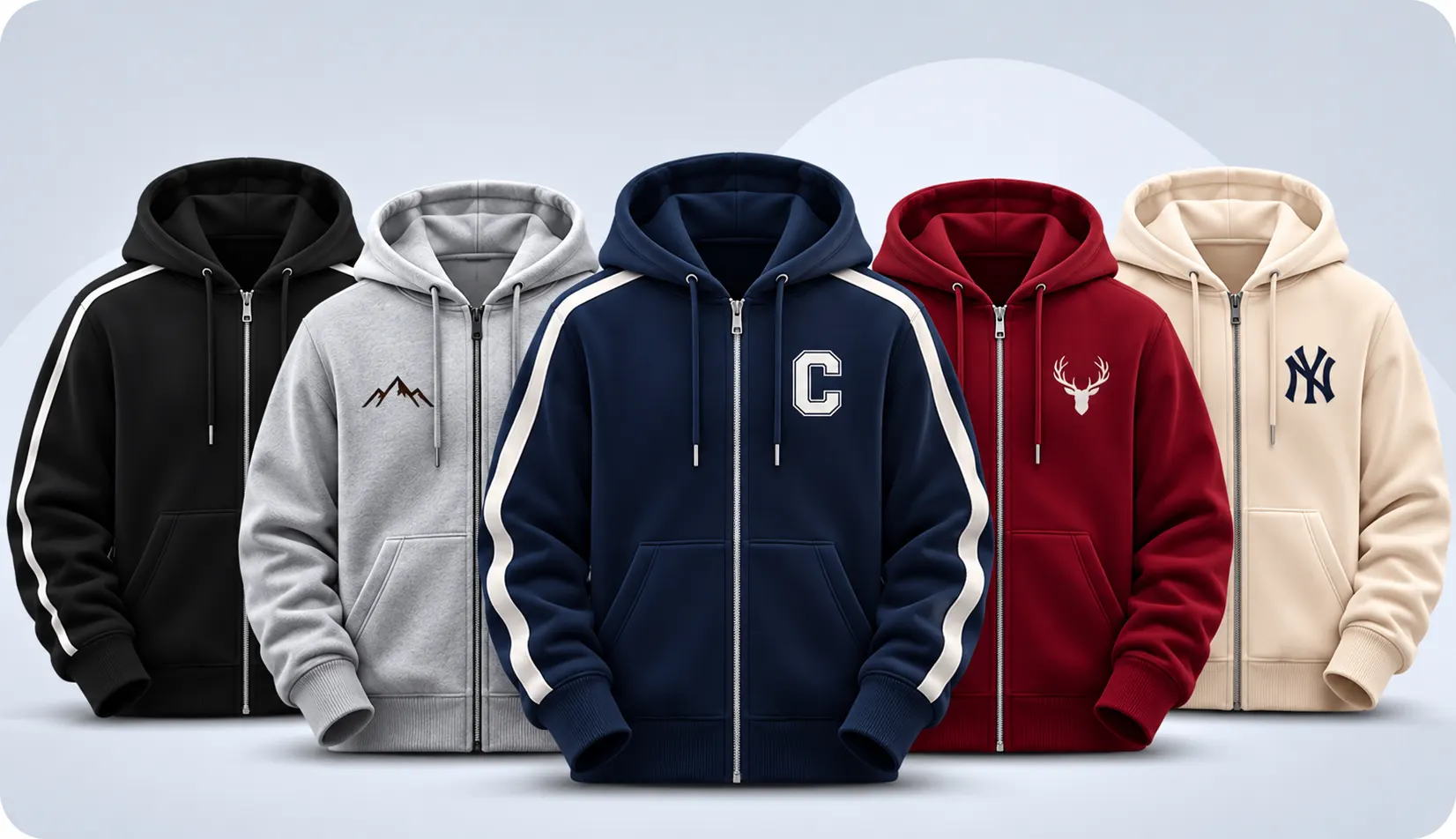
Choose a full-front fastening for adaptable everyday layering.
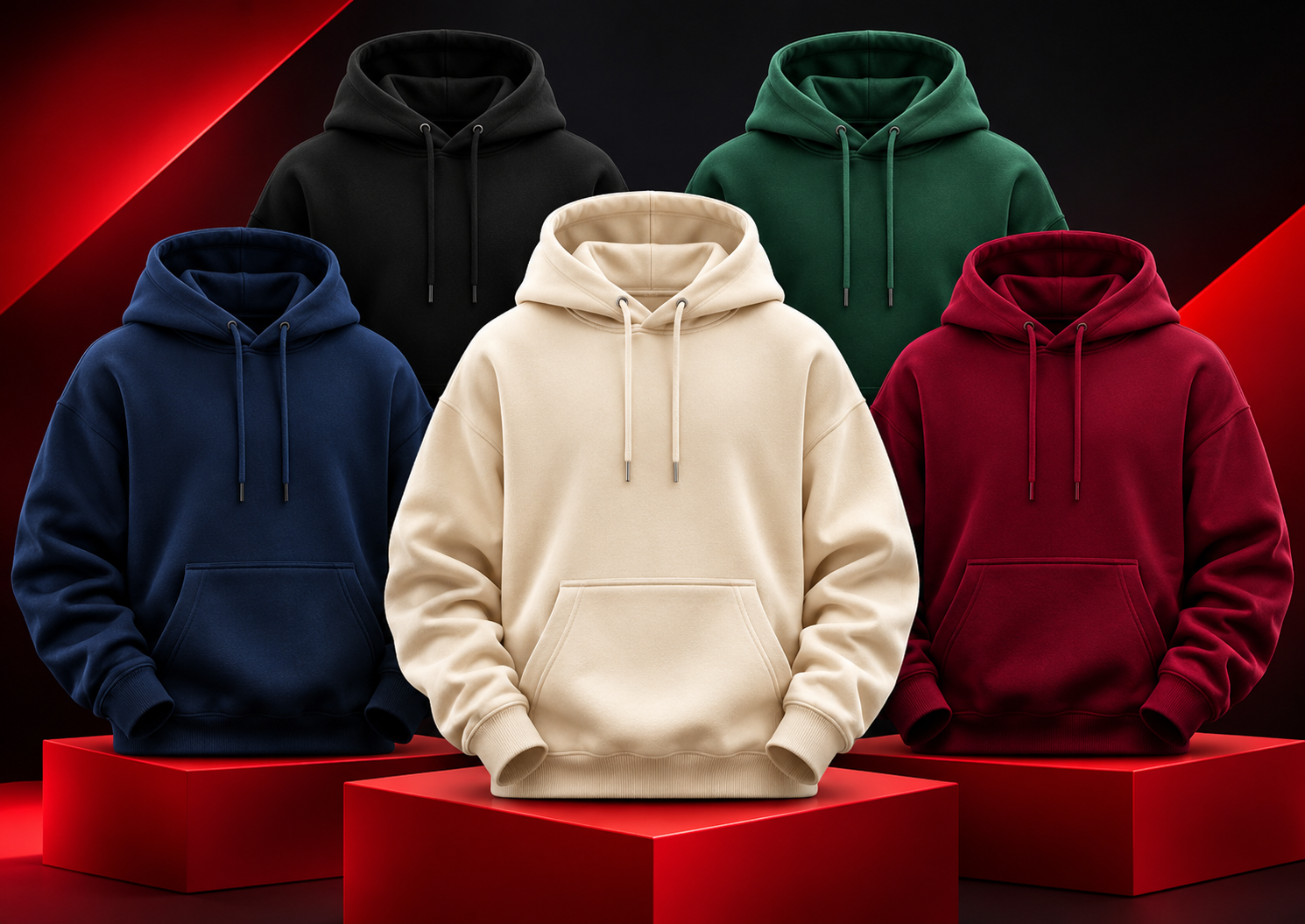
Explore a classic overhead style with a continuous front panel for branding.
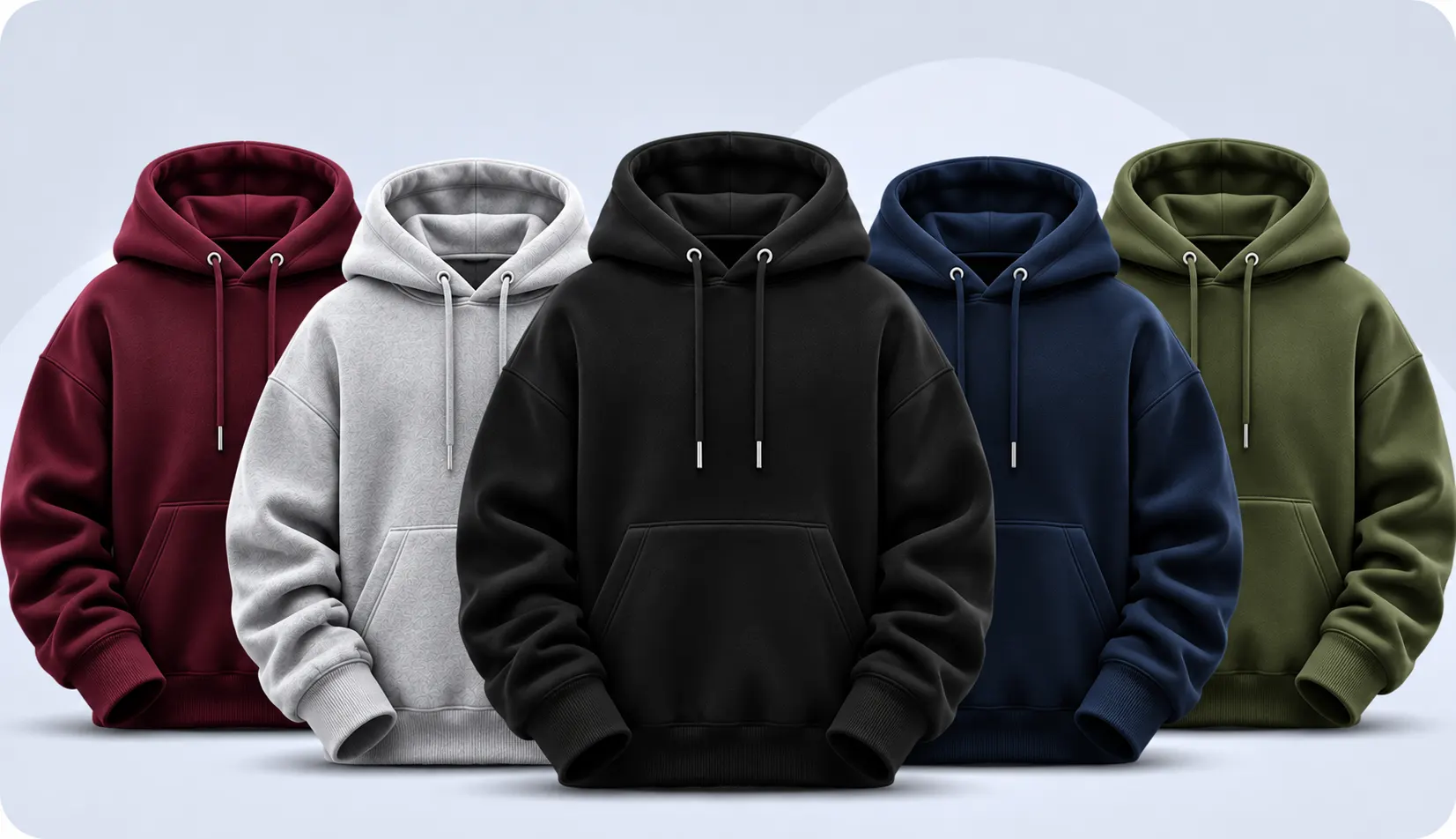
Develop a garment around your creative direction, silhouette and graphics.

Compare interior finishes and constructions for comfortable layering.