DESIGNED AROUND YOUR ACTIVITY
Create coordinated sports clothing with custom performance hoodies selected around your activity, environment and branding requirements. Bring your team logo, club colours and individual details together in a garment chosen for its intended use.
From training layers and warm-up clothing to fitness merchandise, explore suitable fabrics, fits and decoration. Tell us which performance features matter to your project so the proposed specification can be checked against your needs.
Minimum 10 hoodies
Printed and embroidered branding
Personalised colours and placements
Options for teams, businesses and brands
10
Minimum order
24h
Free mockup
14–21
Working days
4.9 ★
from 1,200+ clients
MATCH THE GARMENT TO THE ACTIVITY
A performance hoodie should be selected for what you need it to do. Fit, fabric construction and garment details all influence comfort when moving, layering or travelling between activities.
Start with the conditions in which it will be worn. A lightweight indoor training layer needs a different brief from a warm-up hoodie used outside. Where you require specific properties, confirm them for the selected garment rather than relying on the product name alone.
Review the shoulders, sleeves and body measurements around the movements involved in your activity.
Compare available materials against your requirements for weight, stretch, moisture management and drying.
Choose proportions that work over your intended base clothing without unnecessary bulk or restriction.
Plan decoration size and coverage alongside the garment’s movement, surface feel and intended function.
YOUR TEAM IDENTITY IN EVERY DETAIL
Build a clear layout around your club crest, gym logo or brand artwork. Add individual details where useful, then review each placement against the fabric and garment construction.
Technical materials can have particular decoration requirements. Heat sensitivity, stretch and colour migration should be considered where relevant before selecting the printing process.
Create recognisable branding with a printing method suited to the chosen fabric. Review logo colours, dimensions and position as part of the garment specification.
Explore detailed and multicolour designs where the material and transfer system are compatible. Consider coverage and flexibility alongside the appearance.
Add stitched branding where suitable. Design density, backing and placement need assessment, particularly on lighter or stretch fabrics.
Personalise team garments with individual details. Provide a checked list matching every variation to the correct size and colour.
Include approved sponsor logos or coach and instructor titles. Keep the layout readable and consistent across the group.
Discuss suitable labels, hang tags and packing options. Keep comfort and the intended use in mind when choosing label dimensions and placement.
DEFINE YOUR PERFORMANCE REQUIREMENTS
Choose the garment by its confirmed features. Fibre composition alone does not establish moisture-wicking performance, drying speed or stretch recovery.
Explain your activity, typical conditions and preferred fit so suitable options can be assessed. Include any features that are essential to the project in the final approved specification.
Intended use
Training, warm-up, travel, coaching or active merchandise
Hoodie style
Available pullover or zip-up construction
Fabric composition
Confirmed materials for the selected garment
Fabric weight
Confirmed GSM and overall garment feel
Moisture management
Required properties and supporting product information
Drying characteristics
Any specified quick-drying requirement
Stretch
Required direction, amount and recovery where applicable
Fit
Garment measurements assessed around movement and layering
Sleeves
Sleeve construction, length and cuff details
Hood
Shape, adjustment and suitability for the intended activity
Pockets
Available construction and fastening details
Sizes
Confirmed adult and any available junior range
Colours
Available shades and decoration compatibility
Branding
Suitable printing or embroidery methods
Personalisation
Names, initials, numbers and role titles
Care
Confirmed instructions for the garment and decoration
Choose garment shades that work with your team identity and approved logos. Review contrast so names, numbers and smaller branding remain clear.
On some synthetic fabrics, dye migration can affect printed decoration. The fabric and print system should be assessed together, particularly for darker or strongly coloured garments.
Tell us which properties are essential and how the hoodie will be used. Include any required product documentation or testing criteria so suitable options can be checked before ordering.
CREATED FOR YOUR ACTIVE COMMUNITY
Develop coordinated clothing around the people wearing it and the activity involved. Choose the garment first, then add the branding that connects your group.
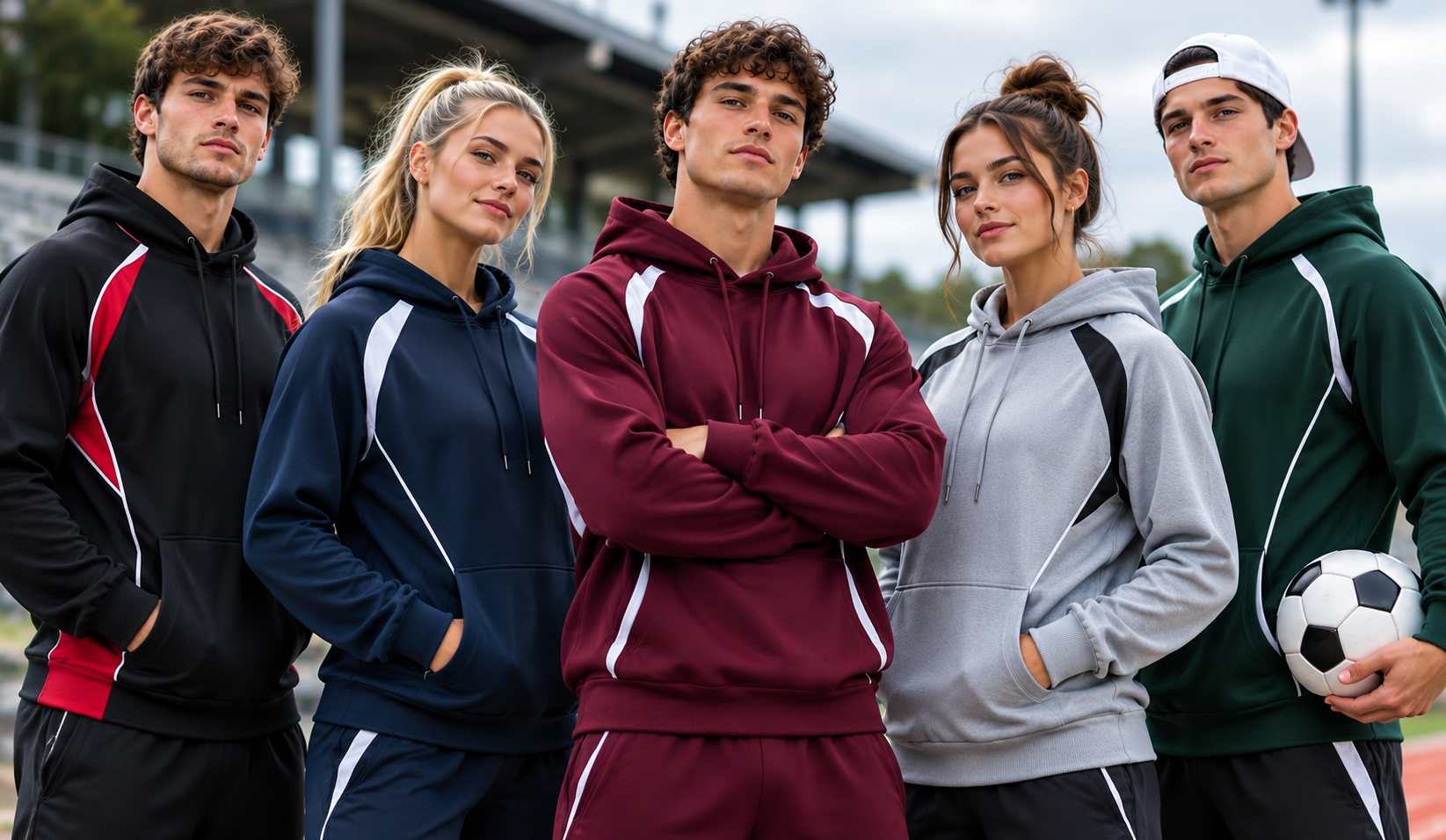
Sports Clubs
Combine your school identity with a year graphic or approved leavers’ design. Add individual names where required to give each garment a personal detail.
Club logos and colours
Player names and initials
Coach identification
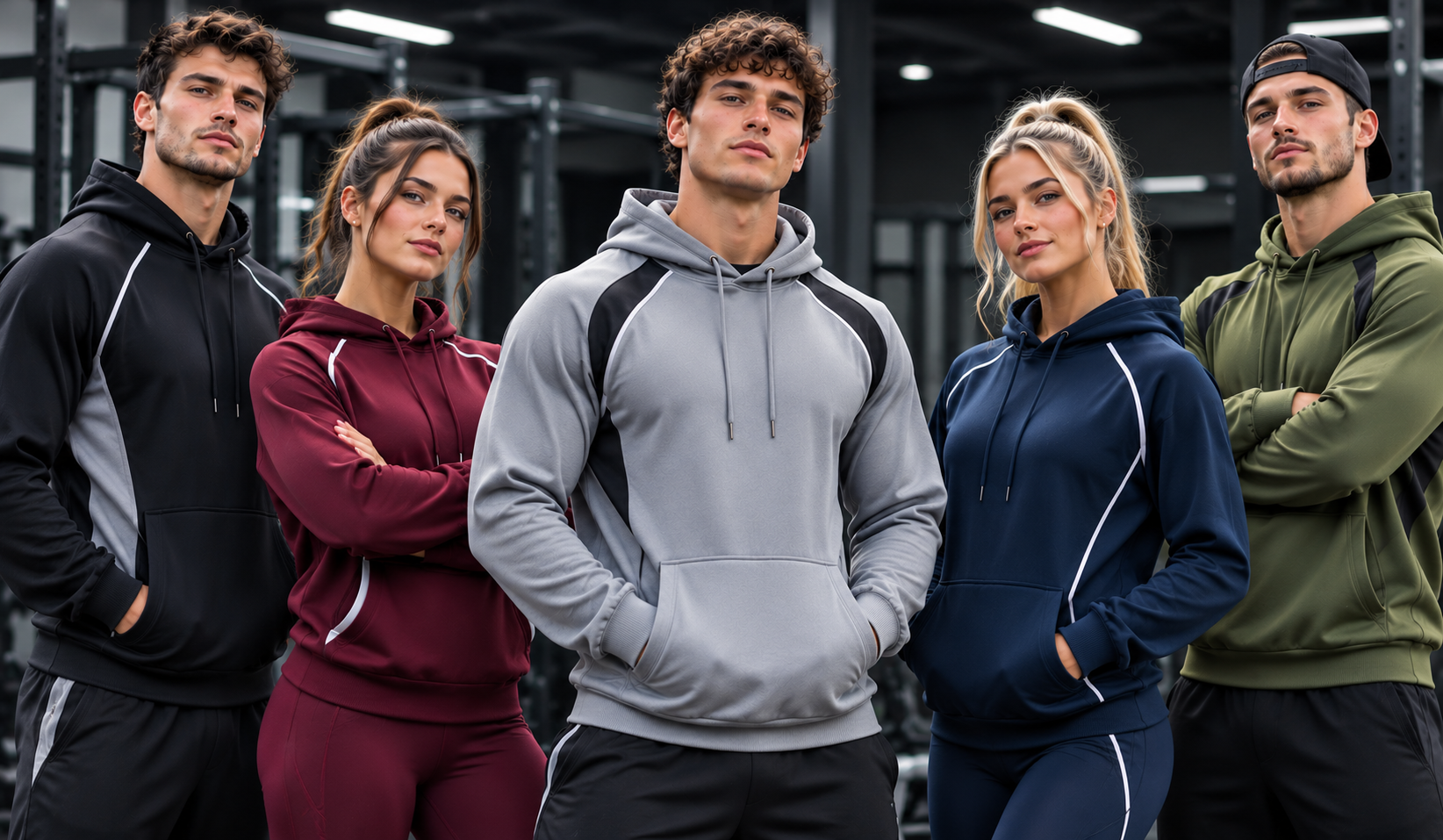
Gyms & Fitness Studios
Build a coordinated range for instructors, members and gym merchandise. Distinguish between clothing intended for exercise and casual garments worn around sessions.
Instructor clothing
Member merchandise
Fitness events and challenges
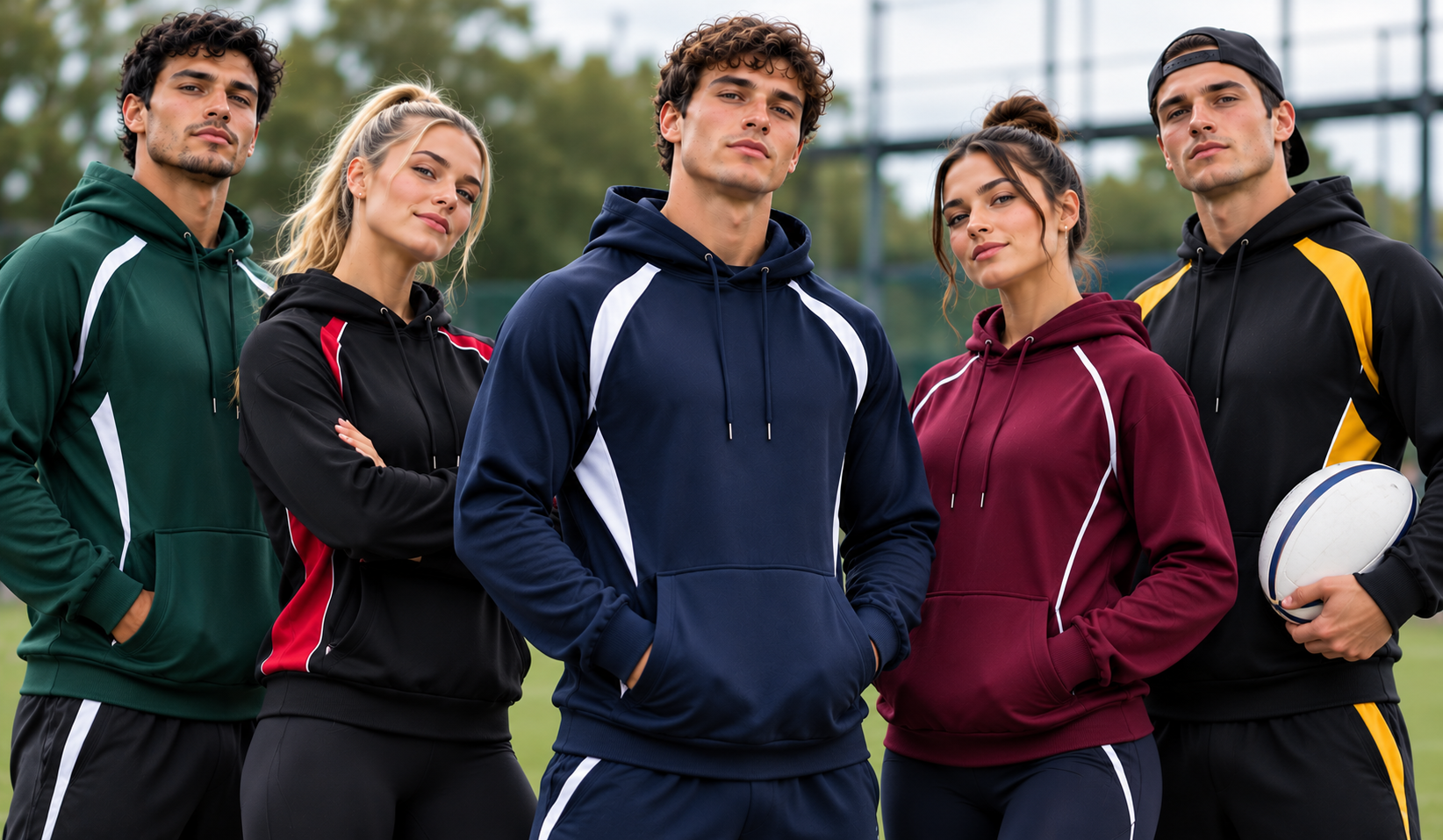
Schools & Universities
Create personalised clothing for school teams and university sports societies. Plan the sizing and required features around the age group and activity.
School sports teams
University clubs
Coaches and organisers
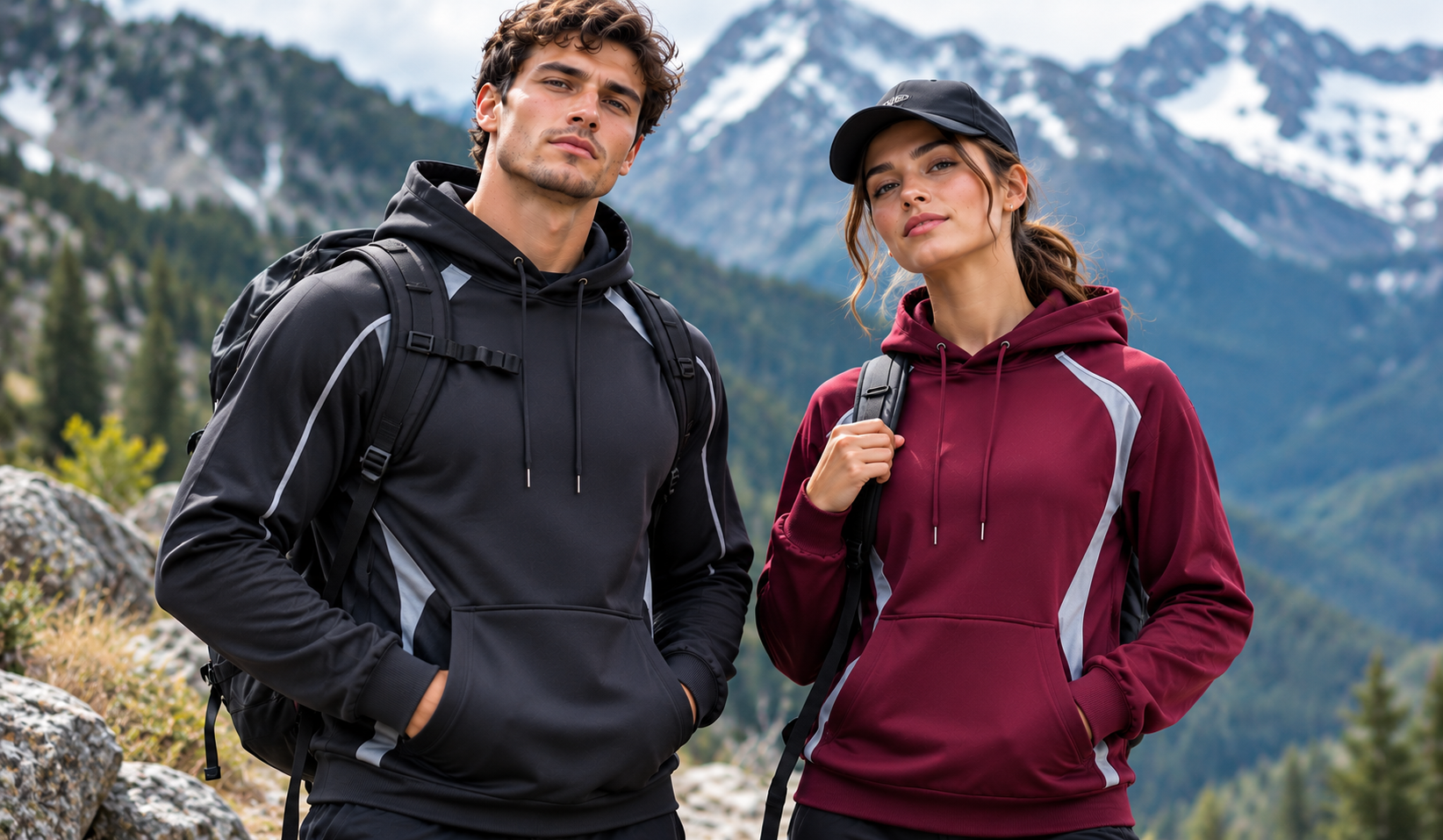
Running & Outdoor Groups
Discuss the intended pace, environment and layering system before selecting a hoodie. Include visibility or weather-related requirements where relevant.
Club activities
Group events
Coordinated team clothing
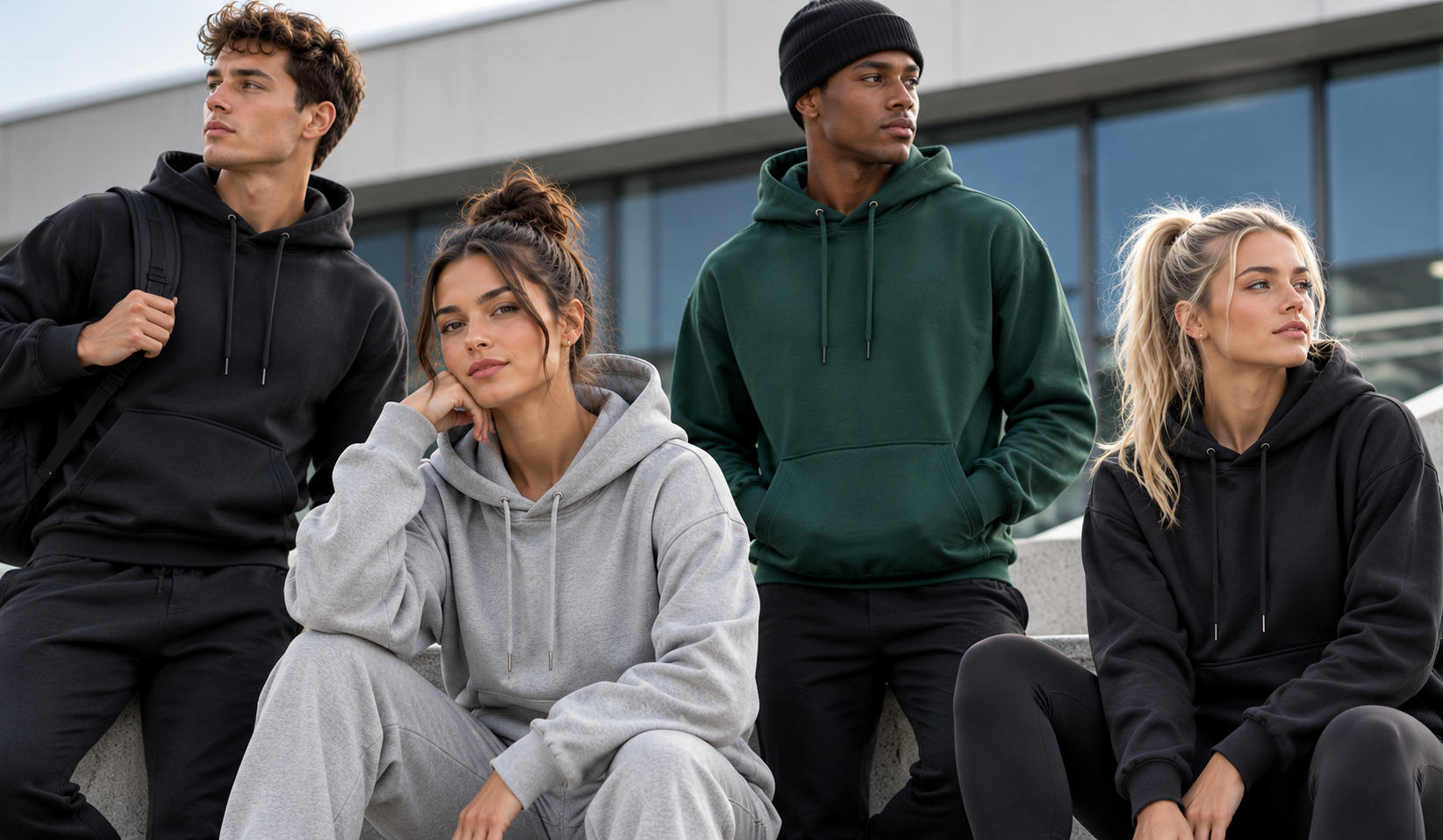
Activewear Brands
Bring your fit, fabric and branding brief together to create a considered addition to your range. Confirm performance claims against the chosen product specification.
Activewear collections
Branded training layers
Labels and product presentation
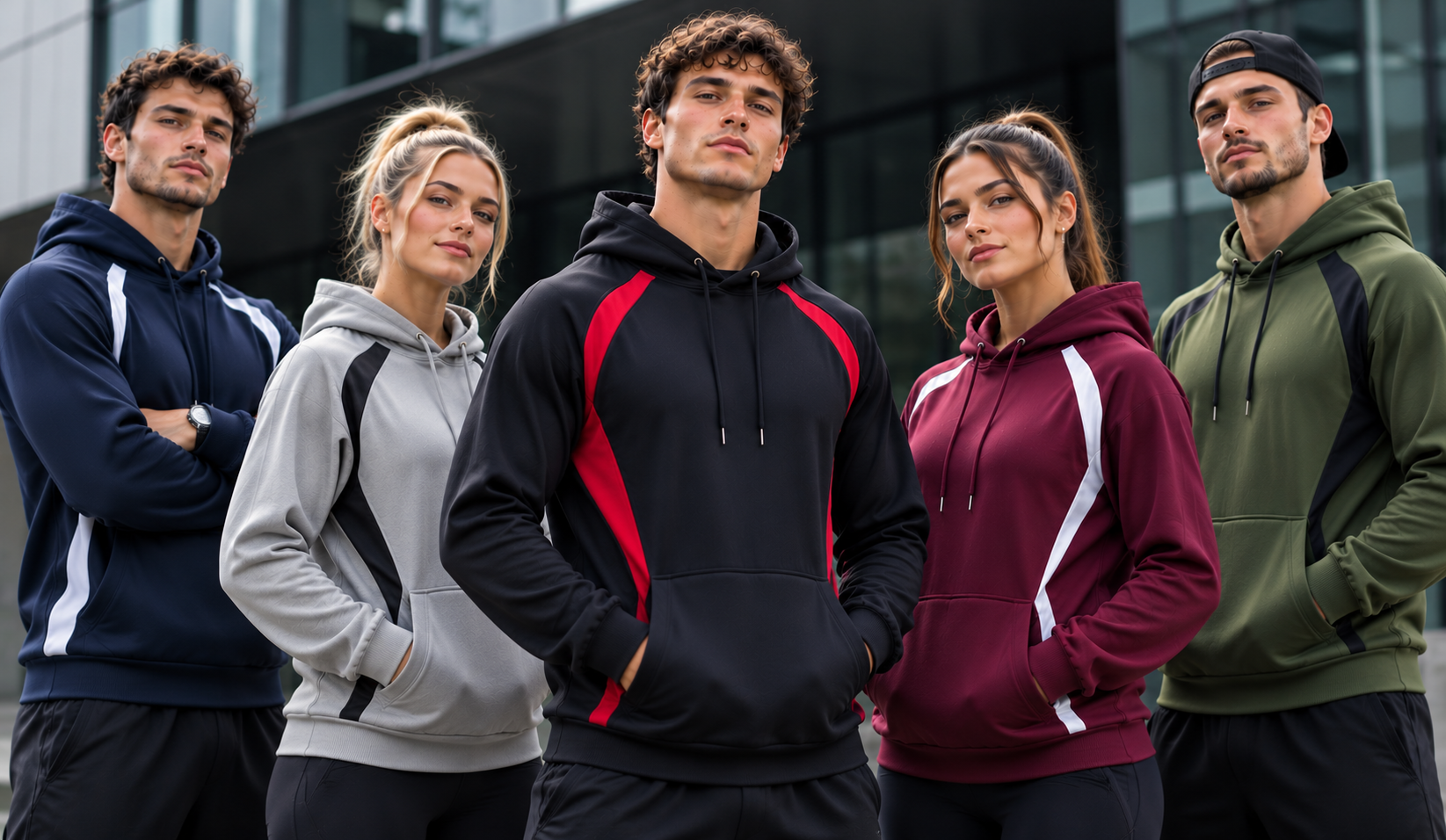
Events & Coaching Teams
Create identifiable clothing for coaches, instructors and event teams. Add suitable role titles alongside your organisation’s branding.
Coaching teams
Fitness event organisers
Activity leaders
FROM ACTIVITY BRIEF TO BRANDED GARMENT
Define the intended use and essential features at the start so the garment and decoration can be assessed together.
1
Send your activity, quantity, colours and size breakdown. Include your artwork and any required fabric properties.
2
Check the proposed specification, measurements and decoration method. Confirm the branding dimensions and any individual details.
3
Approve the garment, confirmed features, artwork and personalisation list. Agree any sample or additional review requirements before production.
4
Your completed hoodies are prepared for dispatch to the agreed address. Share any competition, event or launch deadline during the initial enquiry.
PERFORMANCE HOODIE FAQS
Find practical guidance for choosing a garment around its intended activity.
It is a hoodie selected or developed with particular activity-related requirements in mind. These might include movement, moisture management or drying characteristics. The term does not guarantee the same features across every garment.
No. Moisture-wicking properties need to be confirmed for the selected fabric or garment. Do not assume them from a product name or fibre composition alone.
No. Drying characteristics and resistance to water entering the garment are different properties. If weather protection is required, include that separately in your specification.
Suitability depends on the activity, conditions and garment details. Fit, hood construction, pockets and fabric should be assessed against the intended use and any applicable team requirements.
Start with the features you need rather than a material name alone. Explain the activity, climate, layering and care requirements so suitable fabrics can be considered.
Not automatically. Airflow and comfort depend on the fabric structure, composition, finishing and decoration. Weight is only one part of the specification.
Include the stretch requirements in your enquiry. The direction and amount of stretch, together with recovery, affect how the garment moves and retains its shape.
A zip-up allows adjustable coverage, while a pullover offers a continuous front panel. Choose around the activity, layering preferences and garment options available.
Printing can be assessed for the selected material. Fabric composition, heat sensitivity and dye behaviour influence the suitable process and application settings.
It may be suitable, but the design and fabric need assessment. Dense stitching can affect lighter materials, and backing may influence comfort or stretch in the decorated area.
Yes. Decoration can change surface feel, flexibility and the behaviour of the covered area. Consider artwork coverage alongside any required movement or moisture-management properties.
Dye migration occurs when colour from a fabric moves into the decoration, potentially changing its appearance. It can be relevant to some dyed synthetic garments, so compatible materials and print systems need consideration.
Individual personalisation can be requested. Supply a checked list matching each variation to the correct garment size and colour.
Yes, separate role titles or artwork versions can be requested. Clearly identify each variation and quantity in the order brief.
Ask about the range available for your chosen garment. Junior styles may differ from adult versions in construction, measurements and colour.
Compare garment measurements with clothing that works well for the intended activity. Consider the movements involved and any layers worn underneath, rather than relying only on usual size labels.
Include the requirement in your enquiry so availability and application can be assessed. A reflective design element should not be assumed to make a garment certified high-visibility clothing.
Only claim those properties where they are confirmed for the selected product. Include any required protection and supporting documentation in your initial brief.
Ask which sampling options are available. A sample can help assess fit, movement, fabric feel and decoration, although it does not replace any testing required to substantiate specific performance claims.
Ask about labels, hang tags and packaging for the selected garment. Consider comfort and placement alongside the information needed for the product.
The minimum depends on the garment, decoration and custom finishing. Share your intended quantity so suitable options can be confirmed.
Pricing depends on the garment specification, quantity, branding positions and individual details. Specialist fabric or development requirements may also affect the quotation.
Timing depends on material availability, approvals and production requirements. Share your required date early and request an estimated schedule with the quotation.
Follow the garment care label and decoration-specific instructions. Check restrictions on detergents, fabric softeners, heat and drying rather than applying one general care routine to every technical fabric.
COMPARE YOUR TEAM’S OPTIONS
Coordinate club logos, player details and shared team identity.
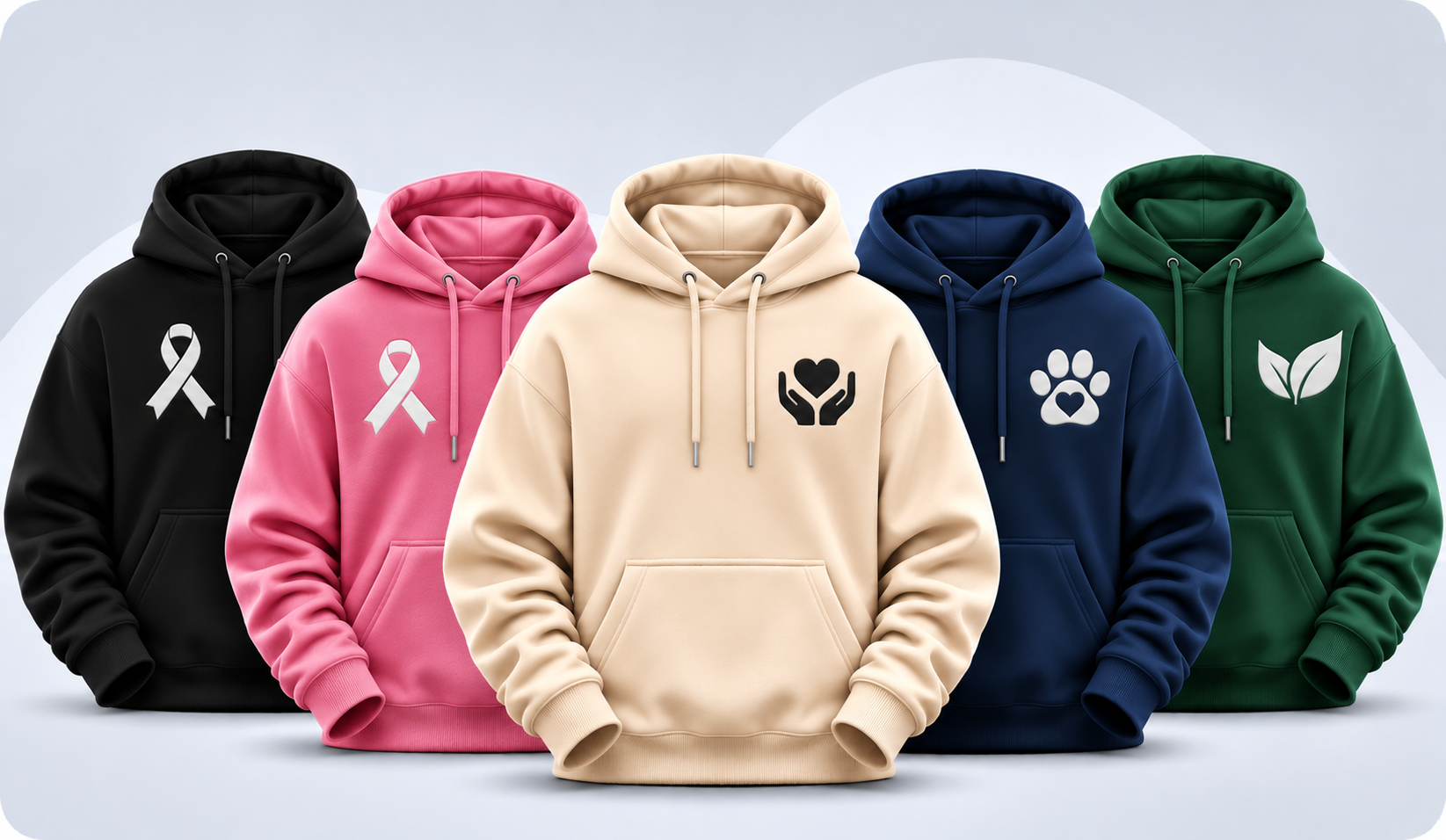
Bring team logos, graphics and individual lettering into your design.
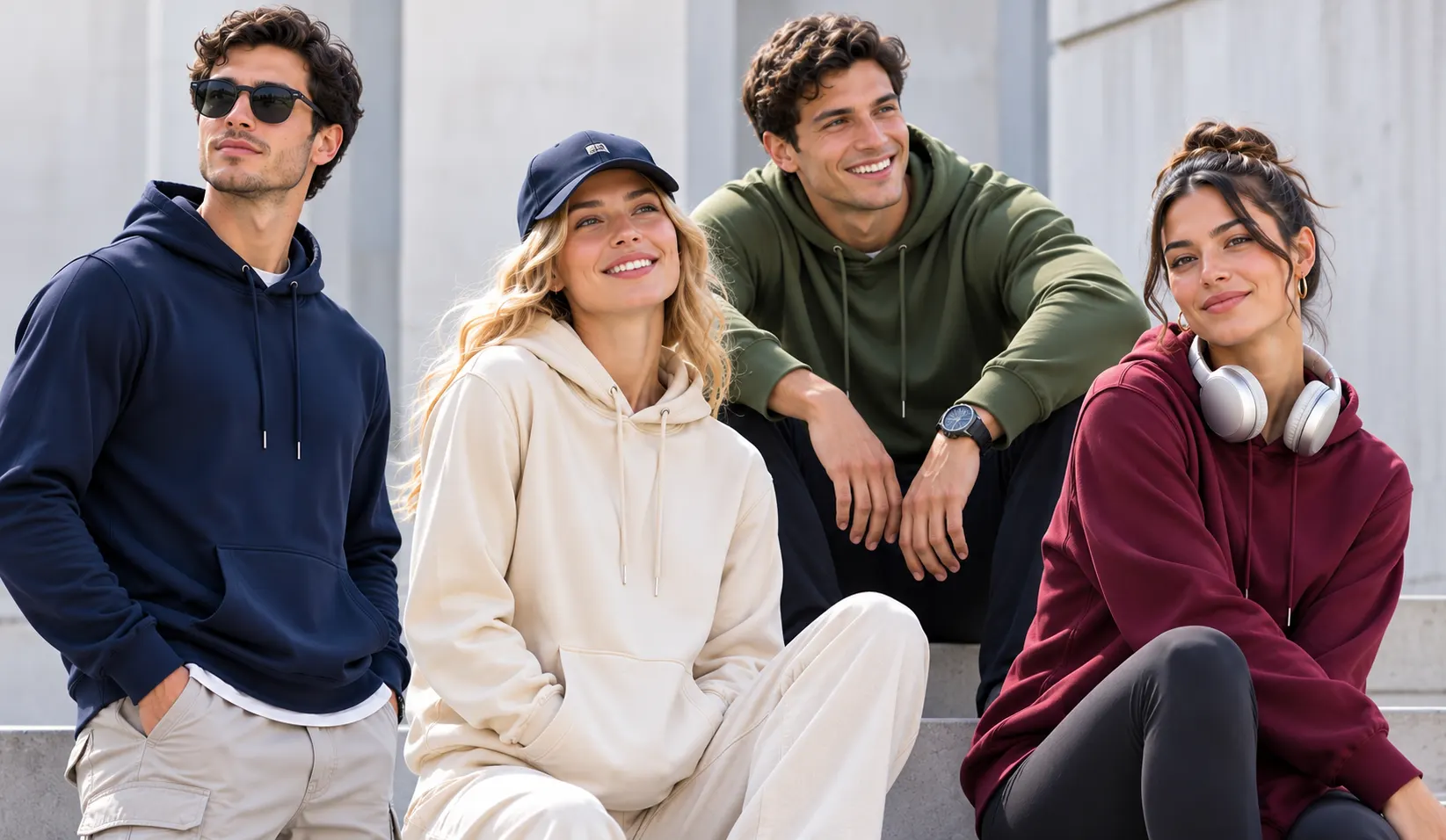
Compare lighter garment options for flexible everyday layering.
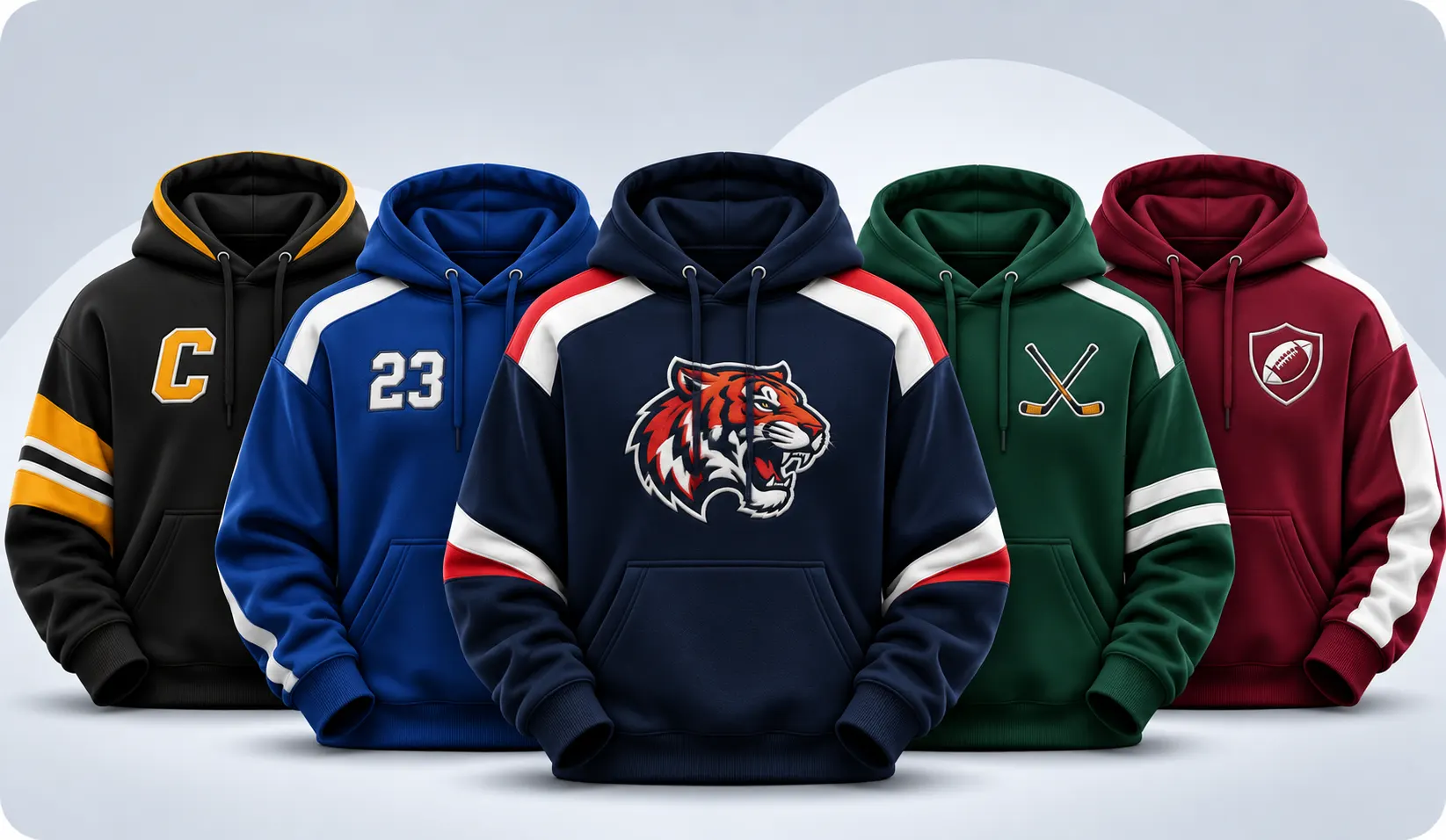
Bring school teams and university clubs together through shared branding.