LIGHTER LAYERS. LASTING BRAND IDENTITY.
Create an easy-to-wear layer with custom lightweight hoodies personalised for your business, team or clothing brand. Combine your preferred fit and fabric with printed artwork, embroidered logos and branded finishing details.
From casual staff clothing to spring merchandise and travel layers, build a hoodie around how your audience will wear it. Choose subtle chest branding or a distinctive graphic to make the garment part of your identity.
Minimum 10 hoodies
Printed and embroidered branding
Personalised colours and placements
Options for teams, businesses and brands
10
Minimum order
24h
Free mockup
14–21
Working days
4.9 ★
from 1,200+ clients
COMFORT WITHOUT EXCESS BULK
A lightweight hoodie offers a lighter alternative to more substantial sweatshirt styles. Wear it over a T-shirt on a mild day or beneath another layer when conditions change.
The right garment depends on more than fabric weight. Composition, knit construction and fit influence how it feels, moves and drapes. Consider these details together to find a hoodie suited to your audience and intended use.
Choose a lighter garment that can sit comfortably over everyday clothing or beneath a suitable jacket.
Explore fabrics that fall naturally for the silhouette you want, from regular fits to looser casual styles.
A lighter hoodie can be a useful extra layer for commuting, travel and events where temperatures vary.
Add artwork sized and positioned to complement the garment without overwhelming its lighter feel.
YOUR DESIGN, THOUGHTFULLY APPLIED
Create branding that works with the fabric rather than choosing decoration in isolation. Compact logos, open graphic layouts and carefully selected placements can help preserve the garment’s comfortable feel.
Share your artwork and preferred finish so the decoration method can be assessed against the material, dimensions and intended use.
Add a stitched finish to suitable logos and lettering. On lighter fabrics, design size, stitch density and stabilisation need careful assessment to support a balanced result.
Create defined graphics and clear typography. Screen printing can suit repeated designs, with the fabric, ink requirements and artwork colours influencing the approach.
Explore multicolour logos and detailed artwork with direct-to-film transfers. Consider the design’s coverage, as large solid areas can noticeably change the surface feel.
Introduce a raised effect to selected lettering or shapes where the fabric and process are suitable. Keep the artwork clear and proportionate to the garment.
Complete your identity with a custom woven label. Discuss a comfortable placement and suitable dimensions alongside the main branding.
Coordinate the finished hoodie with branded hang tags and packaging options for your merchandise or retail collection.
CHOOSE THE RIGHT LIGHTER FABRIC
Start with when and where your hoodie will be worn. A casual indoor layer may need a different fabric and fit from merchandise intended for outdoor events or travel.
GSM—grams per square metre—helps describe fabric weight, but it does not independently establish breathability, stretch or comfort. Confirm the full specification rather than relying on weight alone.
Hoodie style
Available pullover, zip-up or other suitable construction
Fabric composition
Available cotton-rich or blended materials
Fabric weight
Confirmed GSM for the selected fabric
Interior finish
Available unbrushed or lightly brushed finishes
Fit
Regular, relaxed or other available proportions
Body measurements
Confirmed chest width and body length
Sleeves
Sleeve shape, length and cuff requirements
Hood
Available hood construction and drawcord details
Pockets
Pocket design for the selected style
Cuffs and hem
Available ribbed or alternative finishing
Sizes
Confirmed size range and garment measurements
Colours
Available shades and custom-colour enquiries
Decoration
Suitable printing and embroidery methods
Brand finishing
Available labels, hang tags and packaging
Minimum order
Confirmed for your garment and customisation
Production schedule
Confirmed with the quotation and approval process
Choose shades that work with your artwork and the rest of your clothing range. Neutrals can provide an adaptable base, while brighter colours can give teamwear or merchandise a stronger identity.
Fabric coverage can vary with colour, construction and stretch. If opacity is important, particularly for lighter shades, include that requirement when discussing the garment.
Tell us whether you want a soft everyday layer, a loose drape or a specific fabric composition. Include a reference garment or image to help communicate the finish you have in mind.
Talk to Our Team →CREATED FOR EVERYDAY USE
Give your audience a flexible layer that carries your identity. Choose the garment around its purpose, then add the branding and individual details that make it relevant.
Businesses
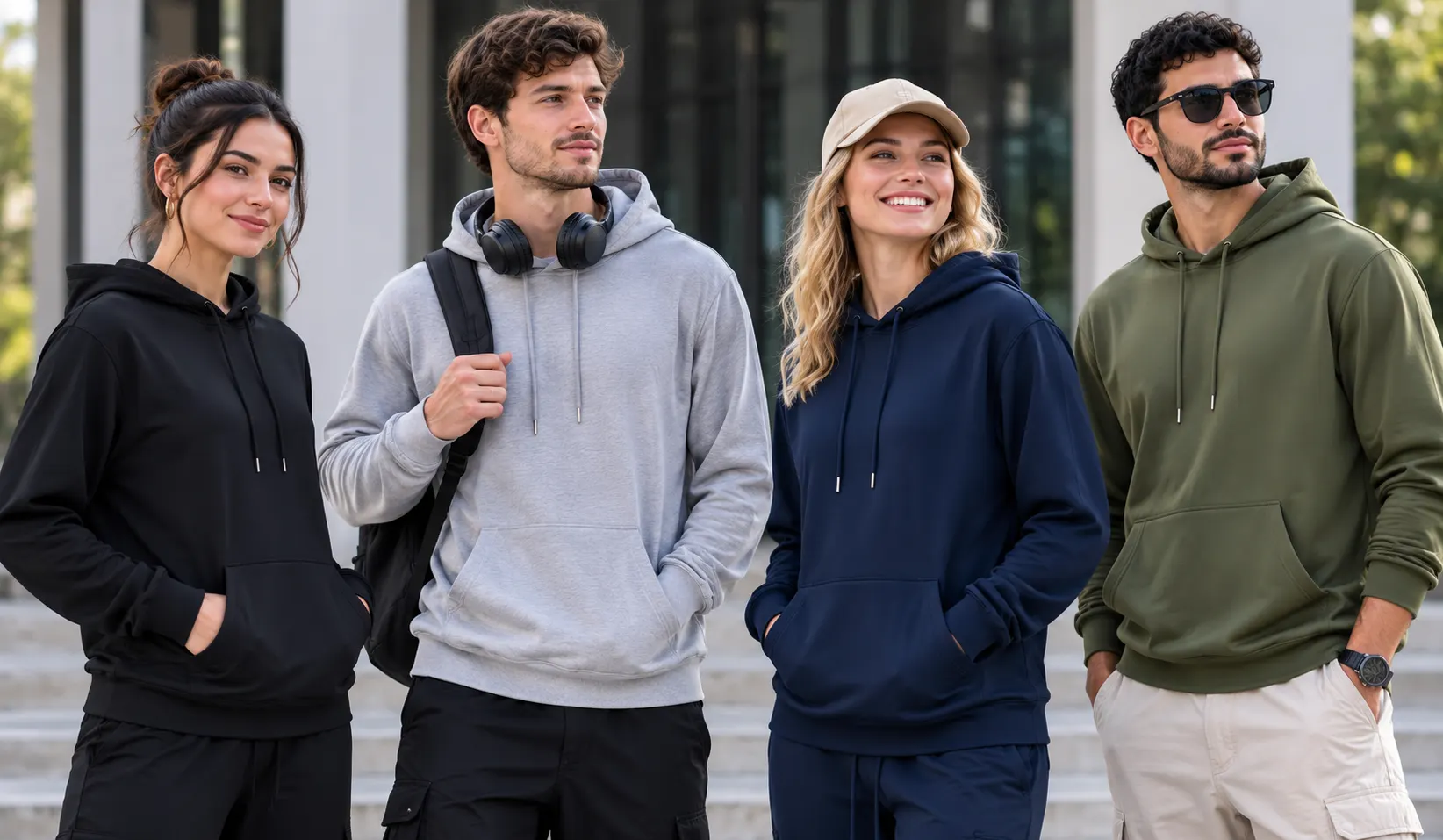
Create coordinated company hoodies for indoor settings, mild-weather activities and casual uniforms. Choose the fit around movement and any clothing worn underneath.
Everyday staff layers
Promotional clothing
Company merchandise
Sports Teams
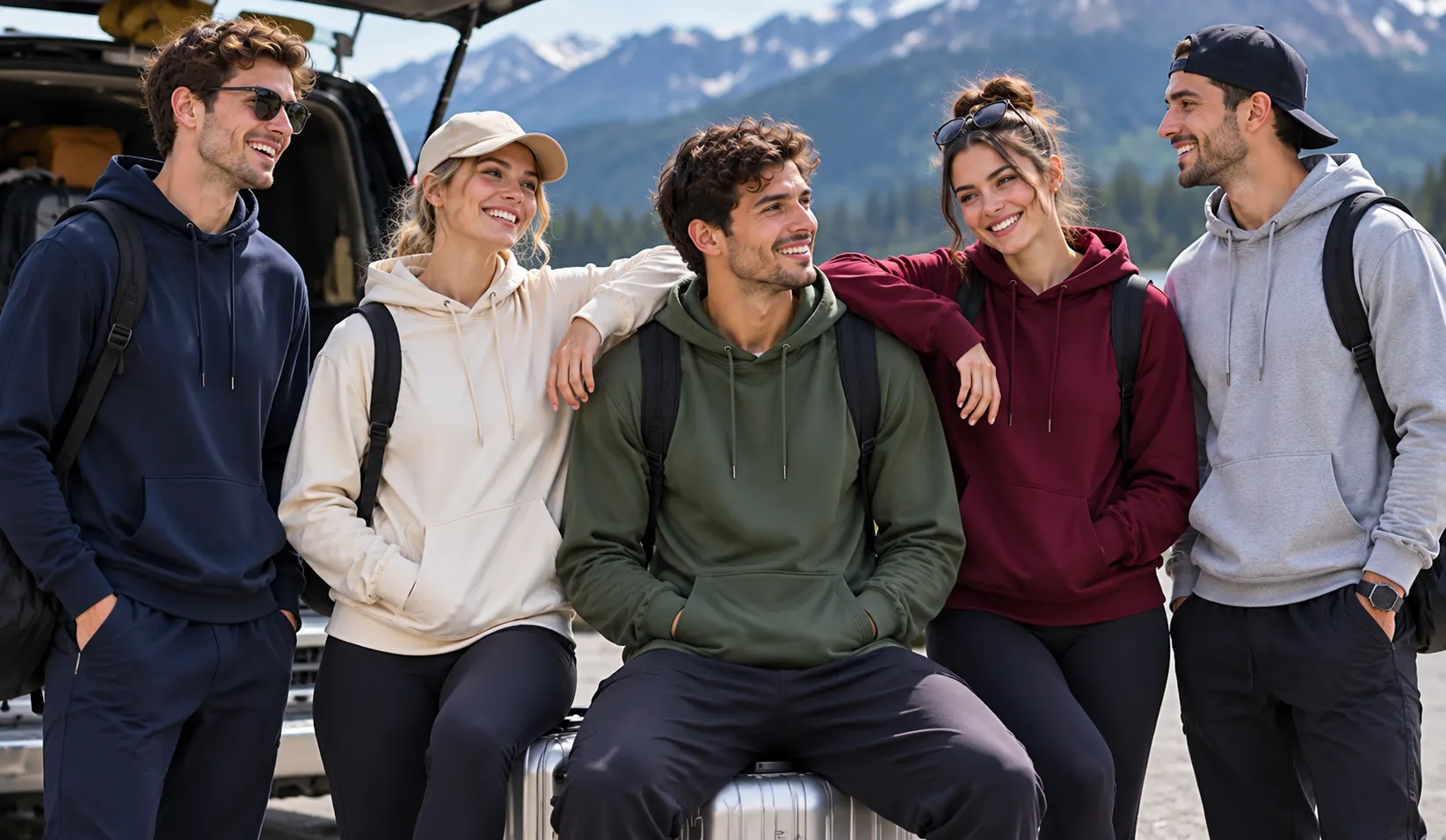
Bring your team identity into a lighter casual layer. Combine club colours with logos, names or initials for clothing worn around training and group activities.
Club travel clothing
Team and coach personalisation
Supporter merchandise
Schools & Universities
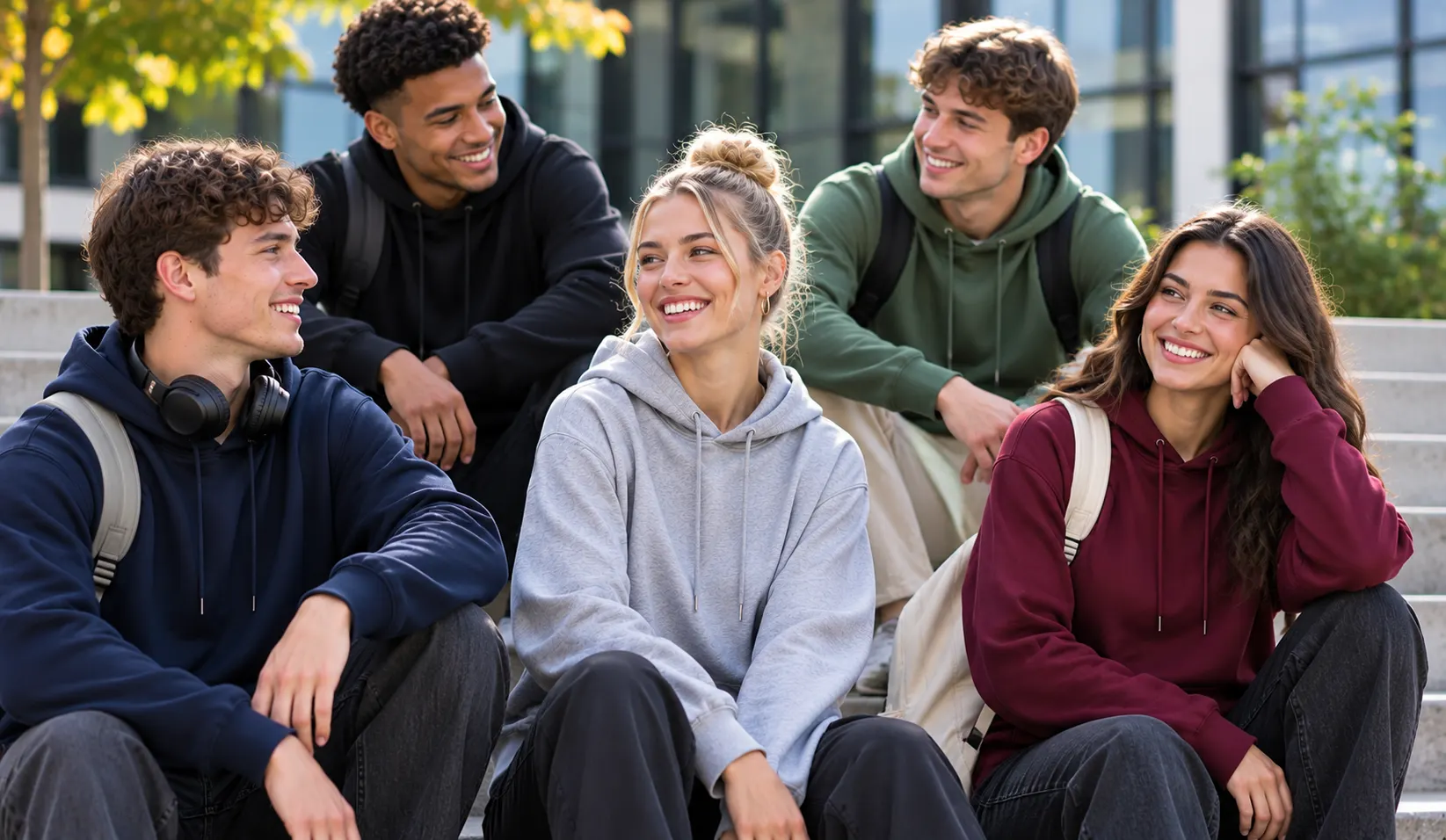
Create personalised hoodies for societies, trips and shared milestones. Plan the fabric, fit and size breakdown around how the group intends to wear them.
Student trips and activities
University societies
Commemorative merchandise
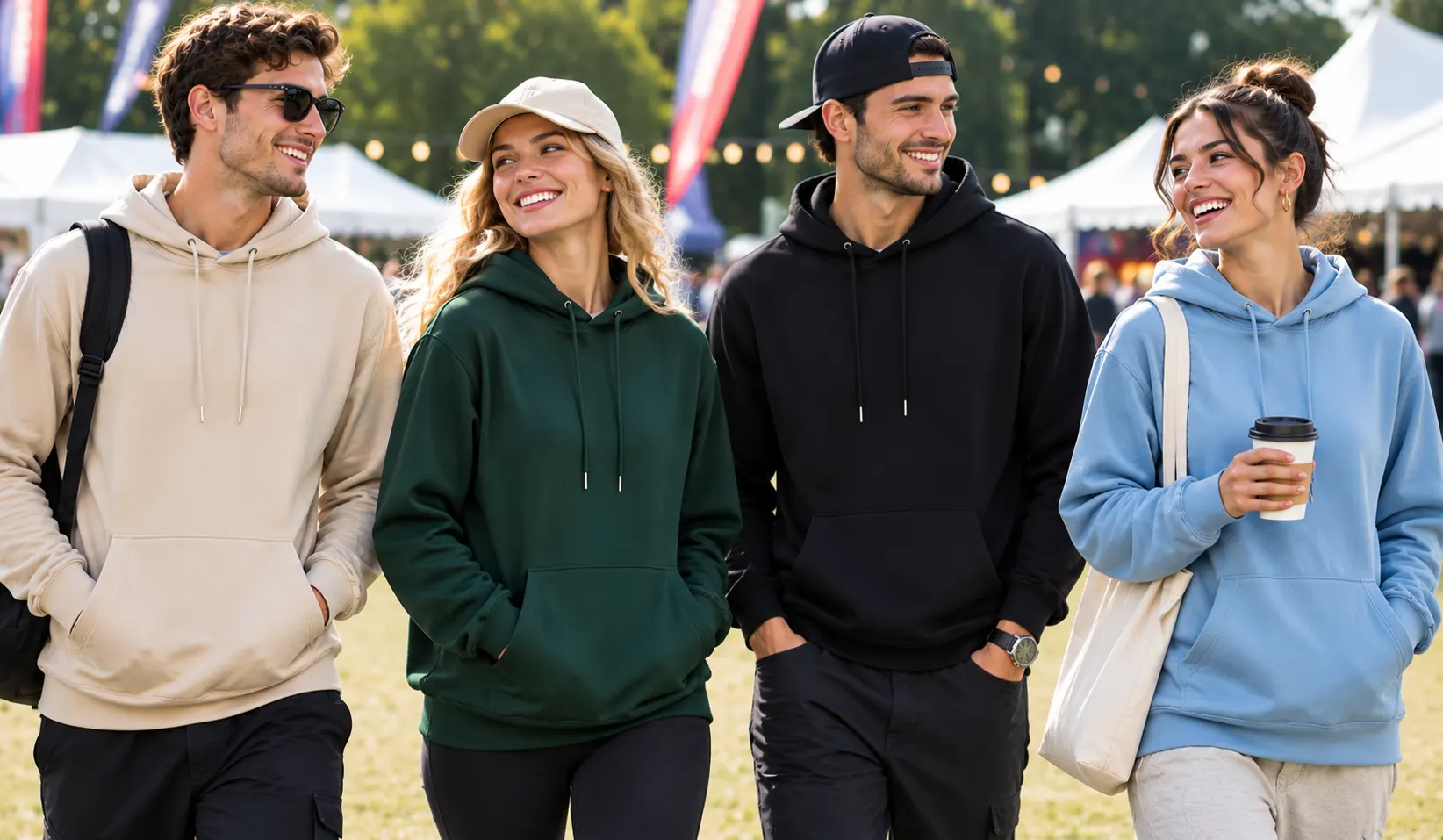
Events
Turn your event identity into a lighter garment attendees can wear and carry. Use a clear logo or event graphic to connect the clothing to the occasion.
Festivals and community events
Organiser and volunteer clothing
Promotional launches
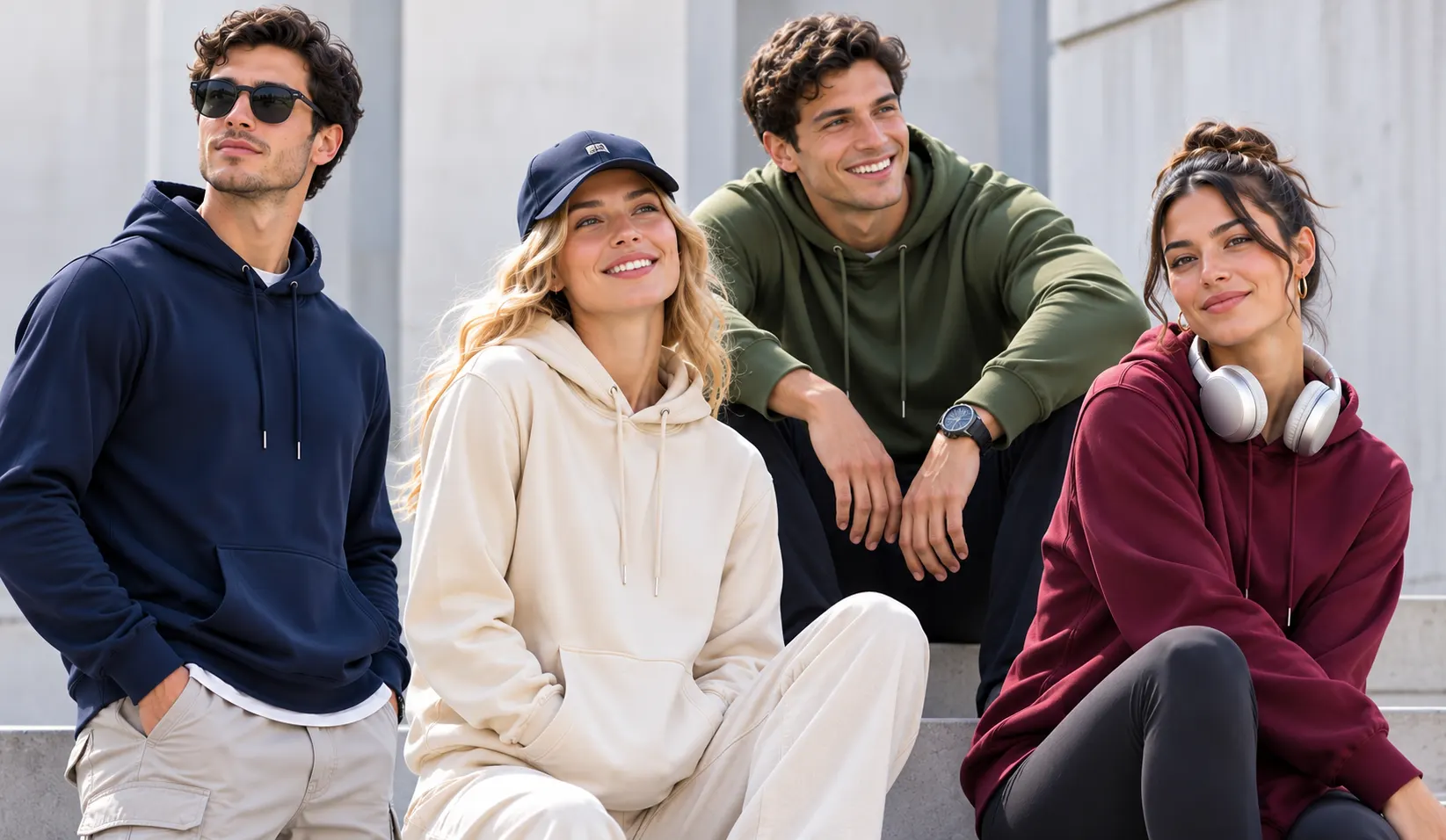
Clothing Brands
Build a product around fabric feel, drape and carefully scaled artwork. Coordinate the fit, colours and labels with your existing range.
Spring and transitional collections
Travel and lifestyle clothing
Printed graphics and subtle branding
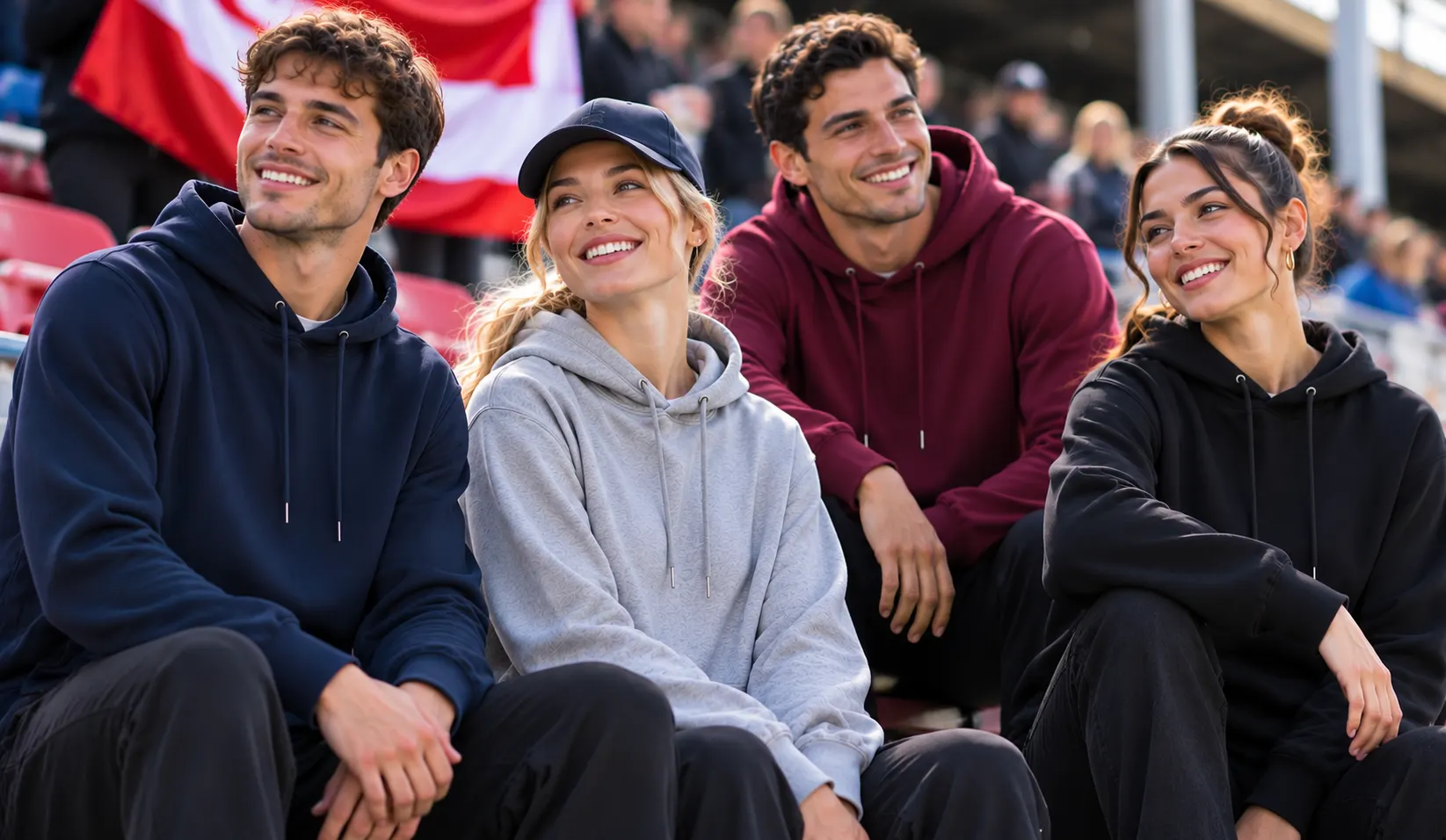
Charities
Create personalised clothing for fundraising, community activities and volunteer groups. Combine your charity identity with a design suited to everyday wear.
Awareness merchandise
Volunteer clothing
Fundraising collections
FROM YOUR BRIEF TO YOUR BRANDED LAYER
Define the garment and decoration together so your quotation reflects the finished product you want.
1
Send your quantity, colours, size breakdown and artwork. Explain the intended use and include any fabric or fit references.
2
Check the proposed fabric, garment measurements and decoration method. Review logo dimensions, placements and any individual personalisation.
3
Confirm the final artwork and complete order specification. Production follows the agreed garment details and approval process.
4
Your completed hoodies are prepared for dispatch to the agreed address. Share any fixed event or launch deadline when first enquiring.
LIGHTWEIGHT HOODIE FAQS
Find useful information to help you compare lighter garments and prepare your order.
Ask Us Anything →A lightweight hoodie uses a lighter fabric than more substantial sweatshirt alternatives. The term does not have one universal GSM threshold, so check the actual fabric weight, composition and construction.
GSM means grams per square metre and describes the fabric’s mass per unit area. It helps compare weights but is different from the total weight of a finished hoodie.
They can provide an extra layer on cooler summer evenings or in indoor spaces. Comfort depends on the temperature, activity, fabric and fit. A lighter weight alone does not guarantee suitability for hot weather.
Breathability depends on fibre composition, knit structure, finishing and decoration coverage. It should not be assumed from the word “lightweight.” Include any specific comfort requirements in your enquiry.
Not automatically. Moisture management depends on the fabric and any relevant treatment or construction. If you need a performance feature, ask for it to be confirmed in the product specification.
Weight describes fabric mass, while thickness describes its physical depth. These characteristics are related but not interchangeable. Two fabrics with similar weights can feel and drape differently.
Yes, some lighter fabrics have a brushed inner surface. Others use an unbrushed construction. Check the selected garment’s interior finish rather than assuming all lightweight hoodies feel the same.
Ask about the available styles for your preferred fabric and quantity. A pullover offers a continuous front panel, while a zip-up provides flexible layering and requires artwork to account for the front opening.
Suitable embroidery can be considered, but the design needs assessment against the fabric. Large, dense stitching may affect drape or cause distortion if the specification is unsuitable. Smaller, appropriately prepared designs may be a better option.
The choice depends on your artwork, garment, quantity and preferred finish. Screen printing and DTF have different preparation and surface characteristics. Send your design so an appropriate approach can be assessed.
It can. A large solid design may feel more noticeable on a lighter fabric than a small or open graphic. Consider the amount of printed coverage as well as the overall artwork dimensions.
Yes, you can request multiple positions. Include each design, its approximate dimensions and preferred placement when enquiring so the complete garment can be assessed and quoted.
Individual details can be requested alongside your main branding. Provide a checked list linking every name or set of initials to the correct garment size.
Coverage depends on the fabric, colour, construction and how the garment fits. If opacity matters for your project, request confirmation for the chosen material and shade before ordering.
Compare the selected garment’s chest width, body length and sleeve measurements with a hoodie that fits well. Consider whether it will be worn close to the body or over another layer.
Provide your full breakdown with the enquiry. Availability and minimum requirements can then be checked. Different base colours may require changes to your print or embroidery colours.
Ask about woven labels, hang tags and packaging options. Share the artwork, wording and intended positions so these requirements can be included in the quotation.
Vector files such as AI, EPS or suitable PDFs are useful for logos and defined graphics. High-resolution image files may suit other artwork. Include intended dimensions and decoration positions where possible.
The minimum depends on the garment specification, decoration and finishing requirements. Share your intended quantity so suitable options can be confirmed.
Not necessarily. Fabric weight is only one pricing factor. Composition, construction, quantity, decoration and finishing also affect the total, so compare quotations using the complete specification.
Timing depends on garment or material availability, artwork approvals and production requirements. Request an estimated schedule with your quotation and highlight any fixed delivery deadline.
Follow the garment care label and any decoration-specific instructions. Use the recommended washing and drying methods, and avoid ironing directly over printed or embroidered artwork.
COMPARE YOUR NEXT LAYER
Find the fit, fastening and fabric feel that work best for your project.
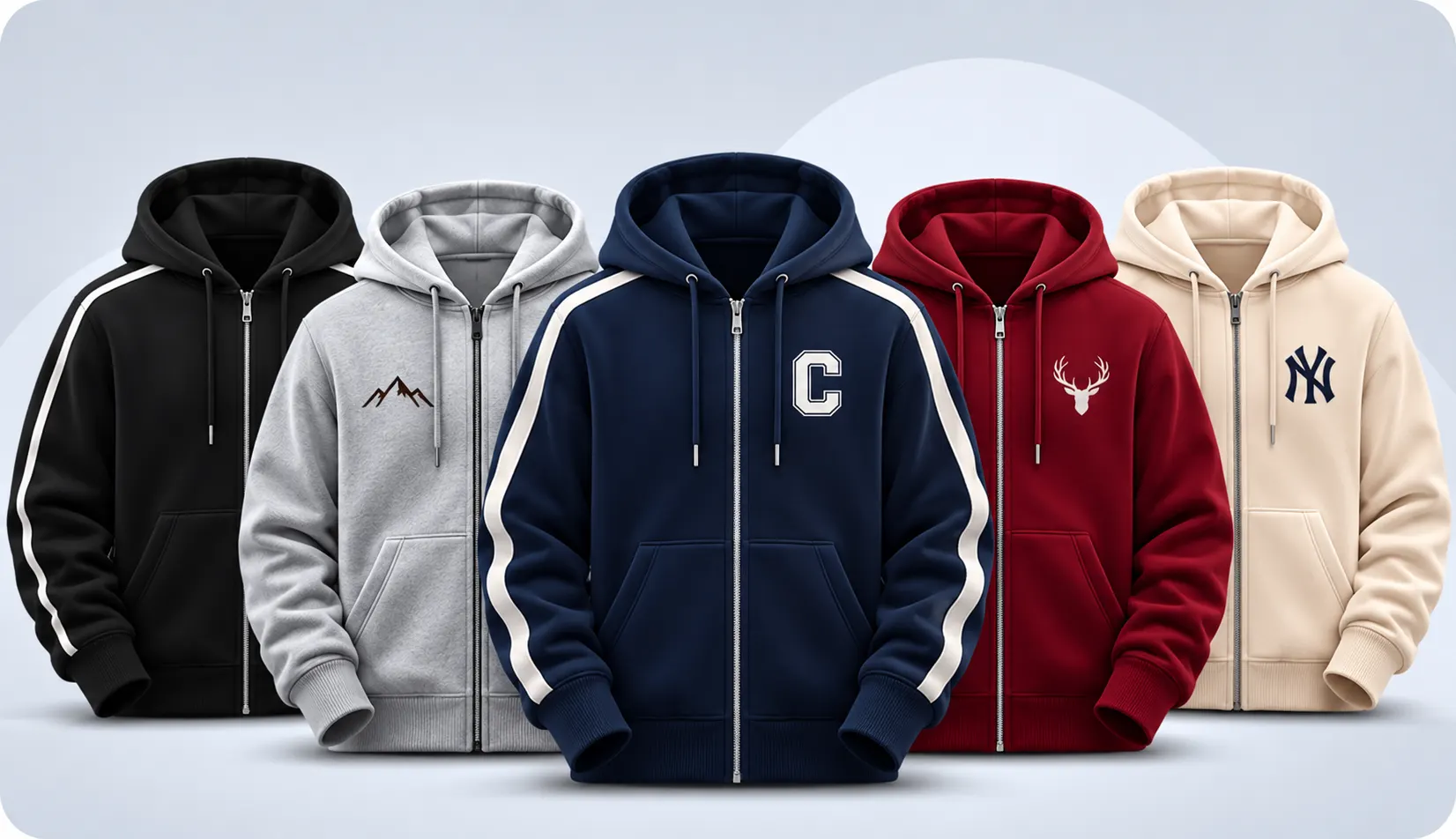
Choose a full-front fastening for flexible layering throughout the day.
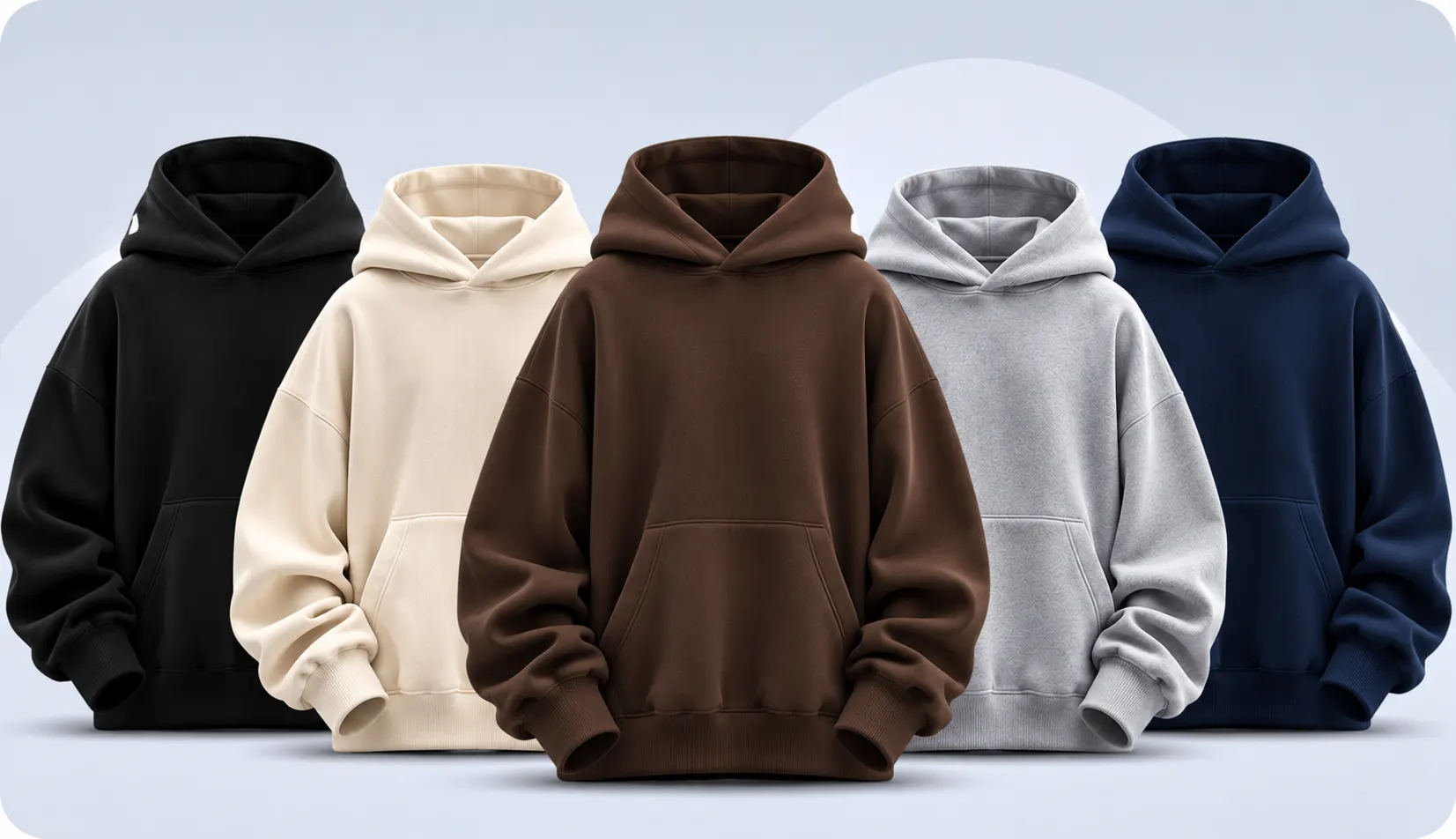
Create a relaxed silhouette with roomier body and sleeve proportions.
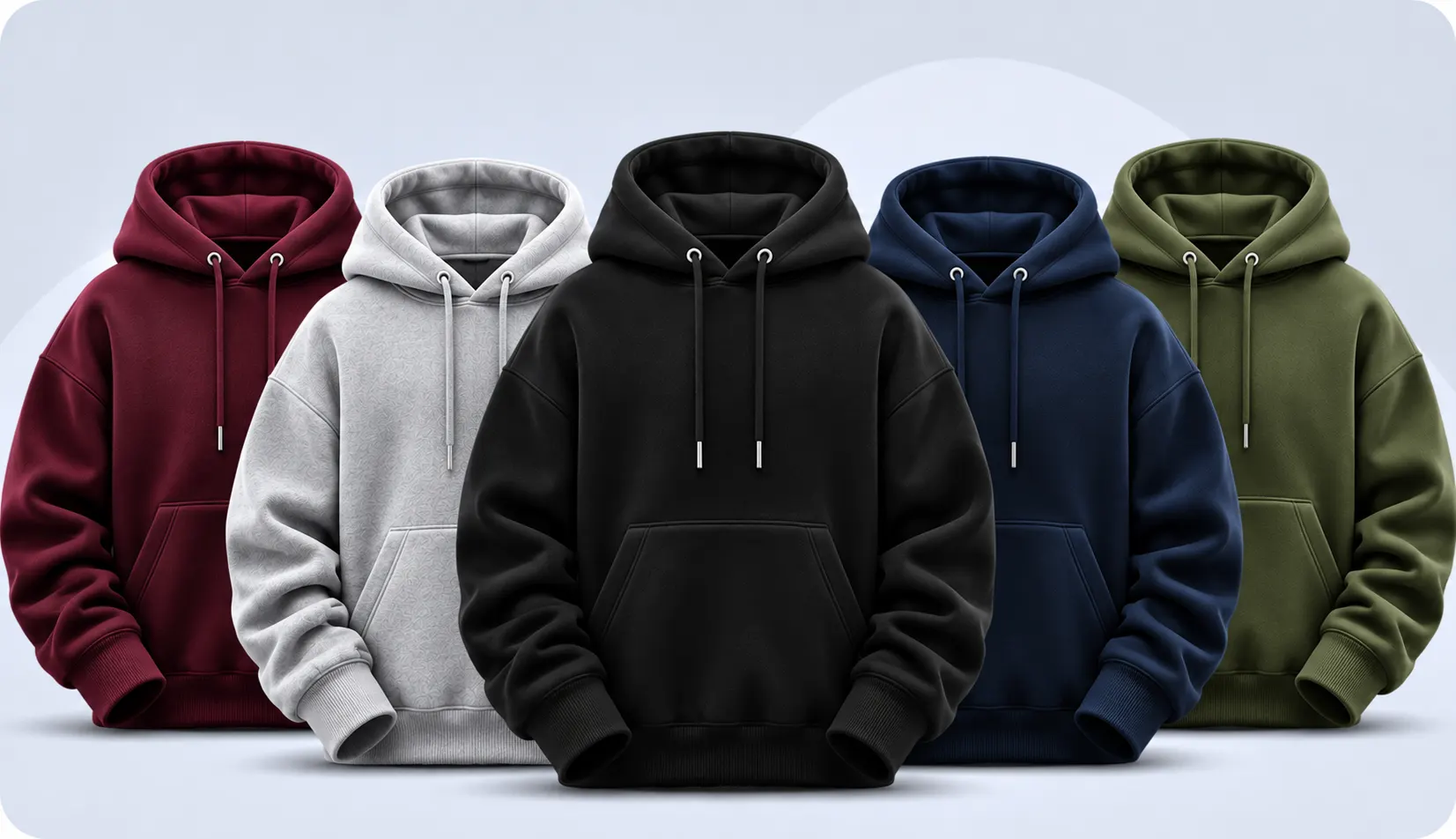
Compare more substantial fabrics for a different feel and garment structure.
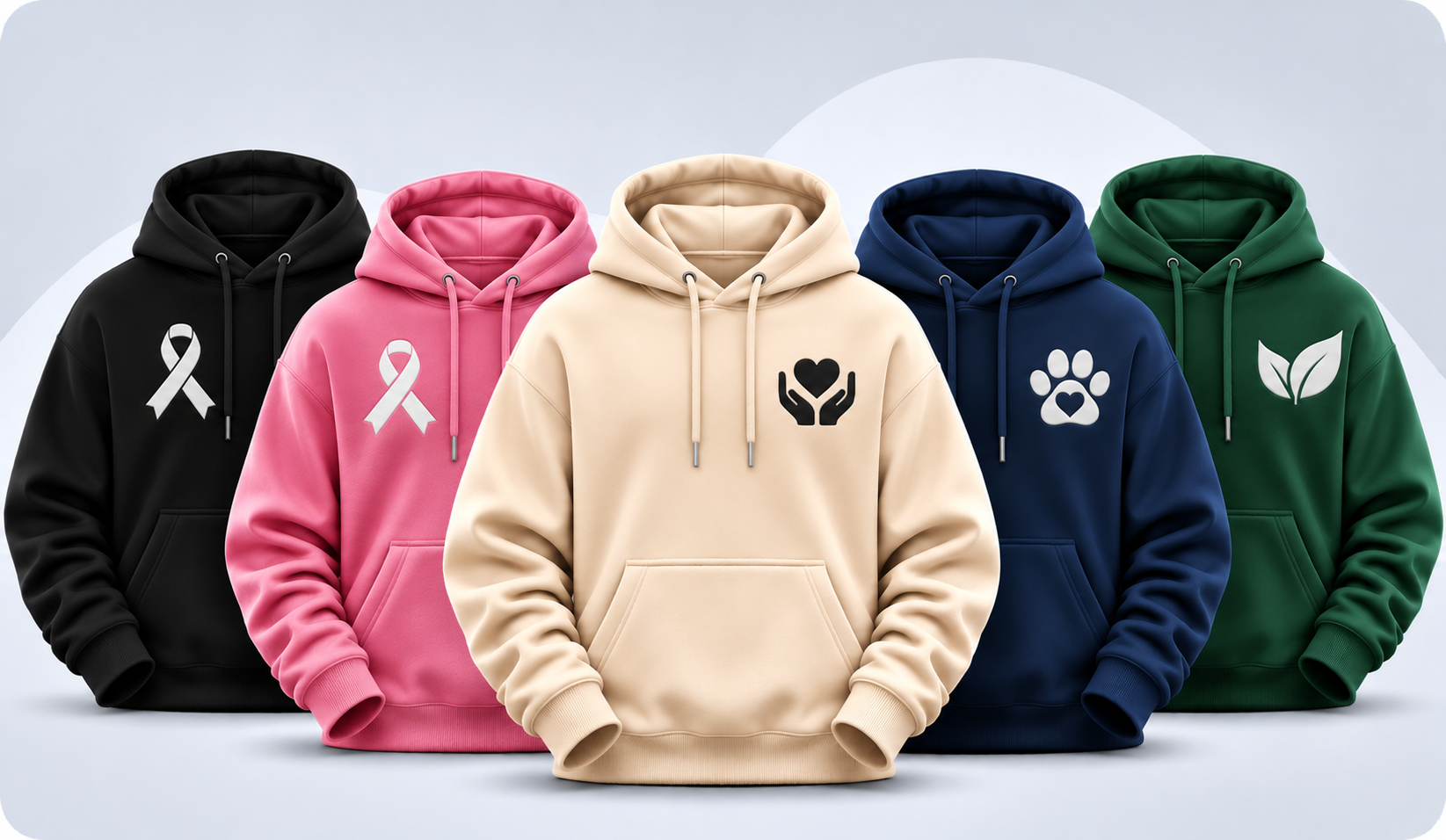
Explore a classic overhead style with space for central front artwork.